

The controversy surrounding the procurement of rapid antibody test kits by the government from Chinese companies, the accuracy concerns of these test kits and instruction to states against using them are not good developments for a country looking to stem the spread of the virus.
Here's an explainer on the entire episode:
What are rapid antibody test kits and why are they important?
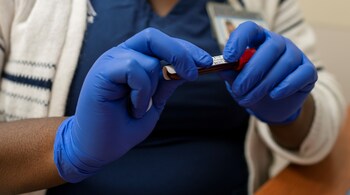
Rapid antibody test kits are similar to pregnancy test kits. It just need two drops of blood from a pinprick to detect whether the person has immunoglobulin (Ig)M and IgG antibodies. These two antibodies are produced in response to COVID-19 infection.It takes 15-20 minutes to get the result. The immune system produces IgM antibodies in the initial stages of infection and IgG at later stages. If a person has antibodies, he is considered to have immunity against future infection.
The test doesn't require expensive instrumentation, biosafety level-3 laboratories and trained people. The main advantage is that these tests can be mass produced, relatively less expensive and easy to self administer.
Antibody test kits are also considered critical to find the infection status in the community.
Why the procurement has become controversial?
A court battle between the importer and distributor supplying antibody test kits to ICMR, over violation of their contractual agreements has exposed the huge mark-ups these middlemen were charging. While the landed price of the test kit was Rs 245, ICMR agreed to buy them at Rs 600 per test kit, a margin of 150 percent. These test kits were procured from Chinese firms Guangzhou Wondfo Biotech and Zhuhai Livzon Diagnostics.
The Delhi High Court observed that mark up was on "higher side". The court slashed the price of test kits by 33 percent from Rs 600 to Rs 400 per kit. Apart from ICMR, other state governments too have bought test kits through middlemen, at prices which are much higher than ICMR procurement price. Chattisgarh was an exception as it procured 75,000 rapid testing kits for a price of Rs 337 per unit plus GST, from a South Korean supplier based in India. Tamil Nadu and Andhra Pradesh government have faced criticism from opposition parties in their respective states for paying high price for test kits.
Why didn't ICMR procure test kits directly from manufacturers?
In a press statement issued on April 27, ICMR said it indeed attempted to buy the test kits directly from the manufacturer in China but due to hurdles like the quote being in dollars and lack of guarantees for shipments arriving in good condition – it had decided to issue a tender for the kits. ICMR said Wondfo’s exclusive India distributors, quoted an all-inclusive price for logistics without any clause for advance payment. ICMR said it has not made any advance payments, and government doesn't stand to lose a single rupee.
"When US President Donald Trump is calling Prime Minister Narendra Modi, and asking for supply of hydroxychloroquine, Indian government should have directly approached Chinese government or manufacturers, and have negotiated with them, instead of relying on bunch of traders and middlemen, it's afterall a public health emergency," said an executive who deals with laboratory equipment and testing for reagents.
Quality of the test kits too under cloud
It is not just the procurement alone, even the quality of test kits have come under question. Following complaints from various states about wide variance of results 6-71 percent compared to RT PCR testing. ICMR advised states to stop using rapid antibody test kits made by two Chinese firms Guangzhou Wondfo Biotech and Zhuhai Livzon Diagnostics as they shown wide variation in their sensitivity, despite early promise of good performance.
Instead the medical body asked states to use reverse transcriptase-polymerase chain reaction (RT-PCR) tests. China was upset with Indian government decision to return test kits.
Why are Indian companies unable to make rapid antibody test kits?
There are 3-4 Indian companies, including public sector HLL, which manufactures these test kits. The problem with Indian companies is that none of them have the scale to meet the demand. The test kit requires raw materials such as antigens, antibodies, membranes, gold nano-particles and packaging materials. The lockdown has caused disruption to manufacturing and supply chain of these materials. If some company was able to put all this together, it still needs to get the test kits validated. This is going to take time.
China, South Korea and Taiwan had a two-month headstart over India as they faced the outbreak in February. China is also known for manufacturing at scale. They have now emerged as supplier of the test kits to the entire world, despite incidents of poor quality control.
Will this fiasco impact our testing and lockdown?
The widely used and reliable method for diagnosing COVID-19 is RT-PCR testing, but it has limitation of scaling-up and cost. Due to procurement and quality fiasco, we have lost valuable time to scale up testing. So far India has tested about 8.3 lakh samples for a population of more than 1.3 billion, which translates to about testing of 602 people for 1 million population. US for instance is testing 18,585 people per 1 million population. Though there is no clarity on whether having antibodies to COVID-19 signifies immunity to future infection and how long this immunity lasts, but still policy makers see rapid antibody testing as crucial tool in opening-up of lockdown.
Discover the latest Business News, Sensex, and Nifty updates. Obtain Personal Finance insights, tax queries, and expert opinions on Moneycontrol or download the Moneycontrol App to stay updated!





