




Air traffic in India, like much of the world, hasn’t fully recovered to pre-pandemic levels. While everyone cheered when it crossed the 4 lakh-per-day mark; that has happened just twice since May 2020. The overall average is yet to be breached and it looks more and more likely that it won't happen till the holiday season begins a few months down the line.
Since the restart of civil aviation, there has been a dynamic shift in route profiles, with airlines launching many sectors to fulfil the new demand to connect Tier II cities. The traffic and routes remained at the mercy of Covid-19 waves but a dip in cases saw a sudden spike in demand to tourist destinations.
Revenge tourism was for real. Flights to tourist destinations such as Goa were full and airports in Goa, Bagdogra and Tirupati, among others, saw passenger footfalls higher than in pre-COVID times. Patna and Srinagar punched way above their weight for the first year post restart, often making it a few places up in the footfalls than where they were pre-COVID.
July gets a surpriseStarting from the second half of June, domestic air traffic has been dipping. While this is also in line with seasonality, there were two other factors impacting aviation this time around: the spike in air turbine fuel (ATF) prices, currently at an all-time high of Rs 1.41 lakh per kilolitre in Delhi, and a sliding rupee, which is now south of 79 to the dollar. This has impacted the finances of airlines, which have traditionally fuelled passenger numbers in the July-September quarter with lower fares. This time around, however, the luxury to drop fares does not exist.
In such times airlines have resorted to looking for sweet spots in the country to add flights and make the most of high demand. But where does one find that during the monsoons? Airlines and passengers alike seem to have found their solace in Srinagar! The Delhi-Srinagar-Delhi sector is the second busiest in the country in July, overtaking Delhi-Bengaluru-Delhi, according to data from OAG Aviation, shared exclusively for this article.
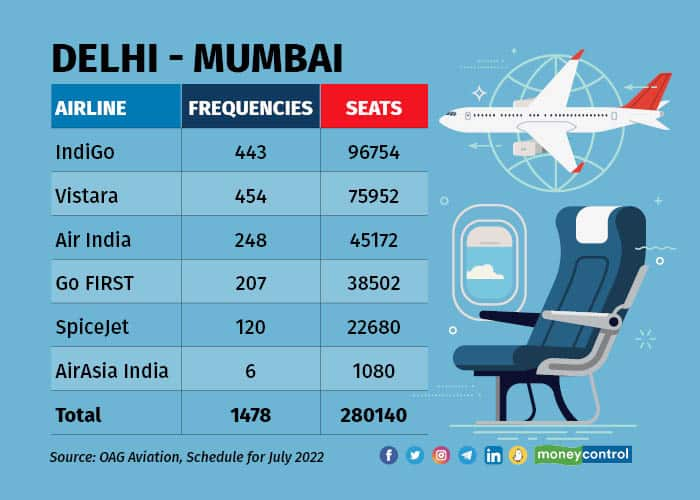
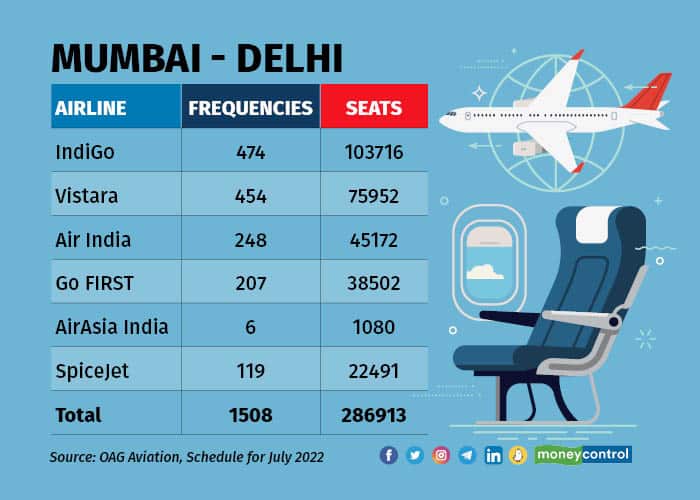
There are only three routes in the country in July that have frequencies higher than 1,000 flights in the month. The Delhi-Mumbai route has 1,478 frequencies, while the Mumbai-Delhi sector has 1,508 flights.
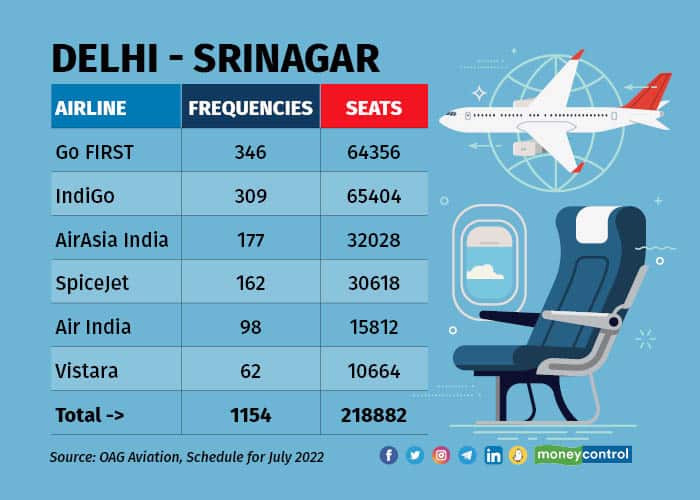
This is followed by Delhi-Srinagar at 1,154 while the Srinagar-Delhi sector has 1,146 flights.
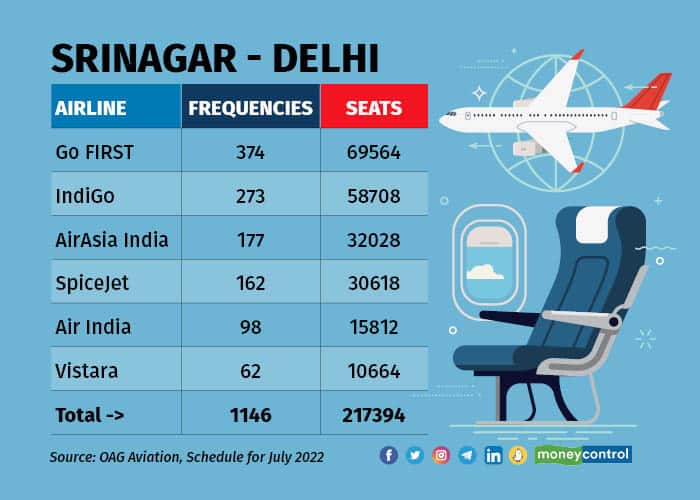
In third position is Delhi-Bengaluru, at 1,062, which is the same as Bengaluru-Delhi.
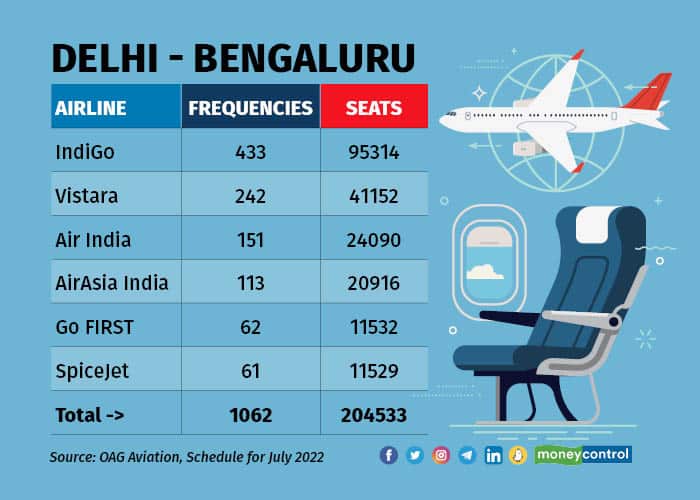
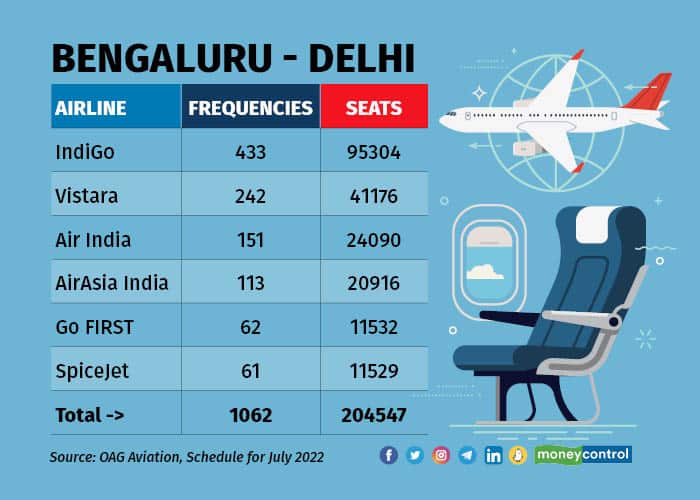
In terms of seats, the Delhi-Srinagar sector has 7 percent more seats on offer in July over the Delhi-Bengaluru route, which has been the undisputed No. 2 for long!
What’s so special about Srinagar?Srinagar is the largest city and summer capital of the Union Territory of Jammu & Kashmir. But the sudden spike in flights is for religious reasons. The annual Amarnath Yatra began on June 30. It concludes on August 11, also the day when some airlines withdraw their frequencies on the sector. Official estimates have put this year’s Yatra at a historical high, with 6-8 lakh pilgrims expected.
The Yatra is taking place after two years of suspension due to the COVID-19 pandemic. In 2019, the year before the pandemic began, the Yatra was curtailed midway due to the scrapping of Article 370, which gave special status to Jammu & Kashmir. Thus it is after three years that the Yatra is taking place in full flow, with Srinagar airport being the closest gateway by air.
What’s in it for airlines?Airlines in India have an average of 3,615 flights per day approved in the current schedule. However, airlines are operating well below the approved level due to market conditions. For July, the average has been between 70-75 percent of the approved schedule. But airlines are holding slots that they are not operating.
With such a high-cost structure, breaking even is a challenge on many routes. A look at ticket prices show that the air fares for the Delhi-Srinagar sector are the same as on the Delhi-Mumbai sector. The difference? The Delhi-Srinagar sector is shorter than Delhi-Mumbai, which makes it attractive for airlines.
Besides this, there remains an opportunity to sell last-minute seats at higher fares and an assured stream of revenue, which is always a challenge in the weak quarter that we are in right now.
Tail NoteSrinagar has made it to top 10 airports often through the pandemic. This was mainly due to the lack of other modes of transport being operational, alongside tourism picking up. But this time around, religious tourism has taken precedence. As lakhs of tourists perform the Yatra, the airlines sure will be hoping for some blessings as well!
Discover the latest Business News, Sensex, and Nifty updates. Obtain Personal Finance insights, tax queries, and expert opinions on Moneycontrol or download the Moneycontrol App to stay updated!
Find the best of Al News in one place, specially curated for you every weekend.
Stay on top of the latest tech trends and biggest startup news.




