






Note to readers: How do corporate leaders surf life after hanging up their boots? What do they do next? What are the lessons they learned in their eventful journeys? What advice do they have for the current crop of leaders? Veterans Unpacked is a new series of interviews aimed to offer readers lessons from retired bosses on life outside the corner office.
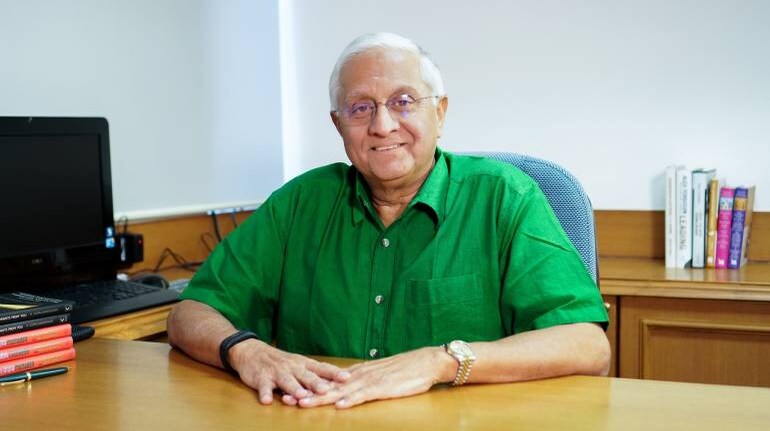
An IIT-Kharagpur trained engineer, R Gopalakrishnan, started his career with Unilever before joining the Tata Group. As a Tata Sons director he was the group's first brand custodian and went on to oversee human resources for the industrial conglomerate. Gopalakrishnan says timing is the key when it comes to demonstration of leadership. When one faces a business dilemma of leadership one must inquire into the theory behind the problem and that not planning for retirement has its perils, according to him.
Edited excerpts:What have you been up to since hanging up your boots?Since I hung up my boots I've written twelve books of which nine have been co-authored and are business related. I also spend a fair amount of time traveling around the world on speaking engagements for leadership and business. There's also a couple board engagements that I'm part of.
 What keeps you busy now? I'm not a hugely social animal. I have learned to maximise satisfaction from solitude and I have a house in the hills and go there to read and write ever so often. I also visit London and the USA where my daughters and grandchildren reside.
I can think of two. Early on as an IT engineer with HUL, I had a low opinion of the sales department until I was posted there. A salesman twice my age asked me to do better by working in retail, and I failed hopelessly when I tried. I learned about the dignity of operational work and how one must be a soldier before becoming a general. The other event was at Tata was when there was an unfortunate scam in 2001 at Tata Finance. Shareholders were distressed and in response Ratan Tata publicly promised no one would lose money. We found out later it cost Tata Rs 800 crore and I learned that the timing to do the right thing at the right time as Tata did, is the key.
What do you miss most about the C-Suite?The sparring with top class intellects and peers.
If you had to relive your corporate career again, what would you do differently?I was the tough guy manager. Square jawed, blue eyes and barking order but I would say that you need career resilience and you also need people sensitivity and I'm sure I didn't always get the balance right.
What are the changes in the corporate world that you see now that are vastly different from your time?The great positive is of course the acceleration of technology. On the other side of the coin I also see the deceleration of people-orientation or the human factor in organisations and that is a consequence of the former. It's like two plates moving in opposite directions and it's not glacial but tectonic.
I would give that credit to Deepak Parekh because he is a remarkable combination of efficiency in transactional thinking and effectiveness in the higher order of strategic thinking. It's a rare combination when you study and research the people who shape institutions and build them.
How did you plan for life after retirement?TN Ninan asked me to write columns for the Economic Times and I enjoyed that. And well before I retired I wrote my first book which was The Bonsai Manager. It was about life and leadership which in turn is all about learning from experiences and so when I faced any big dilemma in my career I allowed my mind and reading habits to enquire into the theory behind the problem. That got me hooked onto books. Also there is a Jack Nicholson movie called About Schmidt and about the perils of a person who never planned for retirement and it left a deep impression on me.
Also Read: Veterans Unpacked | If you don't fail once in a while, something is wrong, says Arun NandaIs there anything you would tell your younger self?What I would say is that not you, stupid. It's the institution. What that means is in the rise of your career you tend to get self-obsessed at the expense of an obsession with the institution and the former should never exceed the latter, but there are phases when it does.
What is your advice for the next cadre of corporate leaders?I would certainly say that at the right moment in your career, lift yourself from simply transactional thinking to the direction of shaping institutions because India desperately needs more business institutions if the job and economy are to grow. The Indian business community has not learned the art of institution building.
Pavan Lall is a senior journalist based in Mumbai.Discover the latest Business News, Sensex, and Nifty updates. Obtain Personal Finance insights, tax queries, and expert opinions on Moneycontrol or download the Moneycontrol App to stay updated!
Find the best of Al News in one place, specially curated for you every weekend.
Stay on top of the latest tech trends and biggest startup news.




