

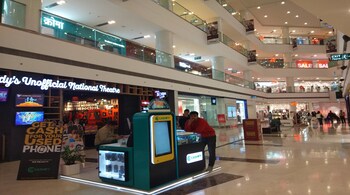
Mall developers and operators say that the sector is expected to grow slower than residential real estate, as the development of new shopping malls slow across the country, and are struggling with footfall due to subdued consumer sentiment, and weakness in major anchor tenants such as multiplexes.
At a panel discussion during the real estate conclave MAPIC India 2024 in Mumbai, Sandeep Runwal, who heads the real estate firm Runwal Realty, observed that mall development in Mumbai, the nation's financial capital, has slowed, despite good traction in retail. Runwal owns the 1.2 million square feet-R City Mall in Ghatkopar, Mumbai, one of the most visited malls in India.
"There is huge traffic in retail. The first half of this year was a little slow because of the elections, but we are seeing demand come back again, and the sector will continue to do well on the back of fashion, food and beverage... As for shopping malls in Mumbai, I have not seen any developer announce a new property here in the last five years. The government needs to re-look into its policies in order to attract investment into Mumbai. We are not attracting offices or retail and only building residential properties. At some point of time, that demand will disappear, because no jobs are being created, and they are going to Bengaluru, Hyderabad, or Chennai," Runwal said. He added that the government may have to look at the substantial construction premiums charged by the civic body and the government in general for commercial and retail spaces.
According to industry players, construction premiums, which include payments to authorities for approvals, additional floor-space index, amenities, and others, often amount to nearly half of construction costs in the Mumbai market for commercial and retail properties.
Nirupa Shankar, joint managing director of Bengaluru-based developer Brigade Enterprises, said at the panel that while malls will grow as a segment, it will grow slower than the residential segment, owing to the six-seven year period where developers recoup their investment in form of rental payments. She added that with retail, developers are able to build in relatively larger rental increases.
At the event, property consultancy JLL launched its report on indoor amusement centres, located in shopping malls and elsewhere, identifying it as an opportunity worth more than Rs 9,000 crore in revenue by 2030, which can bring in additional footfall to malls by providing an entertainment option to families with children.
The JLL report said that over 90 malls in India have various forms of indoor amusement centres, including gaming arcades, e-sports, trampoline parks, and others. JLL's report said that indoor entertainment facilities may form around 11 million square foot in space, out of the 56 million square foot of Grade-A retail space supply by 2028.
Discover the latest Business News, Sensex, and Nifty updates. Obtain Personal Finance insights, tax queries, and expert opinions on Moneycontrol or download the Moneycontrol App to stay updated!





