

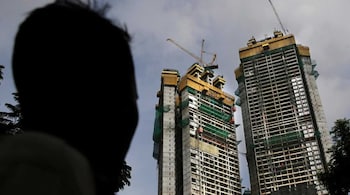
Union Finance Minister Nirmala Sitharaman has made a budgetary provision for second tranche of the Special Window for Affordable and Mid-Income Housing (SWAMIH) Fund of Rs 15,000 crore to help in the completion of one lakh dwelling units.
Real estate developers have been seeking the second tranche of the SWAMIH Fund for long. In 2024, the National Real Estate Development Council (NAREDCO) had urged the Ministry of Finance to introduce the second tranche of the SWAMIH Fund for completion of stuck housing projects across India.
Market experts said that the move will help in reviving real estate projects that are stuck.
What is SWAMIH Fund?
In last few years, India’s real estate sector has faced significant unrest due to a liquidity crunch, growing unsold inventory, and shifting consumer preferences toward completed projects and consequently, numerous projects were stalled.
SWAMIH Fund is funded by the Ministry of Finance and it is created for the debt financing of stressed and brownfield residential properties. The SWAMIH fund was established in 2019 and is managed by SBICAP Ventures Ltd, a State Bank Group company.
SWAMIH Fund is seen as the last resort lender for distressed projects as it provides debt funding to stuck real estate projects or developers with a poor track record of stalled projects. The fund also helps projects stuck in litigation.
According to real estate experts, under the first tranche of the SWAMIH Fund, around Rs 15,500 crore have been raised so far to provide priority debt financing for the completion of stalled and Real Estate Regulatory Authority (RERA) registered residential projects falling in the affordable, mid-income housing categories that are net worth positive but require last-mile funding to ensure completion.
Stuck housing projects
According to data by PropEquity, as of August 2024, as many as 1,981 real estate projects comprising 5.08 lakh units across 42 cities are stalled. This includes 1,636 projects totalling 4,31,946 units in 14 tier I cities and 345 projects totalling 76,256 units in 28 tier II cities.
In terms of units, Greater Noida leads Tier I cities with 74,645 stalled units, followed by Thane (57,520 units), Gurugram (52,509 units), Noida (41,438 units), Bengaluru (39,908 units) and Mumbai (37,883 units).
In Tier II cities, Bhiwadi leads with 13,393 stalled units, followed by Lucknow (13,024 units), Jaipur (9,862 units), Bhopal (7,500 units), Coimbatore (4,808 units) and Nagpur (4.140 units).
Delhi-NCR constitutes 44 percent of the total stalled units in Tier I cities. Delhi NCR has the largest number of stuck projects in India. There are around 1.92 lakh stalled units across 495 stuck real estate projects alone in Delhi-NCR.
How will it help homebuyers and stuck projects?
Sitharaman in her budget speech of February 1 said that under the SWAMIH Fund scheme, 50,000 dwelling units in stressed housing projects have been completed and keys handed over to homebuyers and another 40,000 units will be completed in 2025, further helping middle class families who are paying EMIs on loan taken for apartments and also paying rent for current dwelling units.
One of the success stories of SWAMIH Fund include six stalled projects of the Amrapali Group, having a collective saleable area of 92.71 lakh square feet. In August 2021, the SWAMIH Fund committed Rs 650 crore to these six projects, which had a target to delivery 6,950 housing units.
The move enthused confidence in other financial institutions and a consortium of investors provided Rs 1,500 crore for the remaining projects. This funding also rekindled hope among affected homebuyers.
Sunil Sisodiya, Founder, Geetanjali Homestate, a real estate consultancy, said that the first tranche of the SWAMIH Fund has been quite effective in providing priority debt financing for the completion of stressed and stalled residential projects, particularly in the affordable and mid-income housing segments.
He said that it secured final approvals for about 130 projects amounting to sanctions worth over Rs 12,000 crore across 30 tier I and II cities.
“The introduction of the SWAMIH II fund will also create more momentum from here, generating confidence among buyers and developers to buy and construct homes. Such completion of a stalled project delivers much-needed relief to prospective buyers and fosters economic activities in the housing sector,” he said.
Samir Jasuja, Founder & CEO, PropEquity said that the SWAMIH Fund has the mandate to complete construction of those delayed RERA registered residential developments, that are net worth positive and require last mile funding to complete construction.
“To expedite delivery of homes, the government can rope in reputed national and local developers to take over some of the projects by ensuring their profitability through additional saleable FSIs, speedy approvals, subsidised financing and strict monitoring,” he said.
Address liquidity issues
Dhruv Agarwala, Group CEO, Housing.com and PropTiger.com, said that the government’s renewed focus on resolving stalled projects is reinforced through the Rs 15,000 crore SWAMIH Fund 2.0, targeting the completion of 1 lakh housing units.
"With the fund already facilitating the delivery of over 50,000 homes and another 40,000 units expected by 2025, this initiative will play a vital role in restoring buyer confidence and improving liquidity in the sector," he said.
Shrinivas Rao, CEO, Vestian said that the allocation of Rs 15,000 crore under the SWAMIH Fund 2.0 will address liquidity issues of delayed housing projects.
SWAMIH Fund along with the digitisation of land records is expected to strengthen homebuyers' confidence, he said.
Discover the latest Business News, Sensex, and Nifty updates. Obtain Personal Finance insights, tax queries, and expert opinions on Moneycontrol or download the Moneycontrol App to stay updated!





