

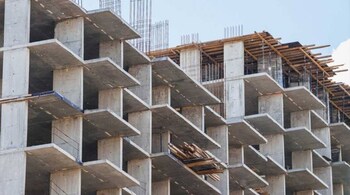
Budget 2022 did not extend the additional tax benefit of Rs 1.5 lakh on interest paid on affordable housing loans for the purchase of homes up to Rs 45 lakh under Section 80EEA of the Income-Tax (I-T) Act, 1961. It also did not extend the tax holiday available to real estate developers for affordable housing projects. Here’s a look at how this will impact the affordable housing segment.
This means that only the loans availed before March 31, 2022, will enjoy the benefit. Also, the tax holiday for affordable housing projects is only applicable for projects registered until March 31, 2022, as no extension has been provided in this year’s budget.
While some real estate experts agree that this is expected to have an impact on the offtake of the affordable housing units in the near future and may even discourage developers to get into the business of affordable housing projects, others are of the view that this was meant to be a perpetual scheme but only limited period schemes announced in previous budgets. Besides, such schemes provide ‘benefit’ to builders and customers but do not become a deciding factor to build or purchase a property.
Assocham’s National Council on Real Estate, Housing and Urban Development is also planning to send a representation on the issue to the government soon.
Pradeep Agrawal, founder and chairman, Signature Global and chairman of ASSOCHAM National Council on Real Estate, Housing and Urban Development told Moneycontrol that the chamber is planning to send a representation on these issues to the government soon.
This tax holiday for developers who are in the business of affordable housing should continue. The tax benefit for first-time homebuyers should also be extended, he said.
Having said that, some state governments such as Haryana have provided incentives to developers active in the segment. The prices of affordable houses that had earlier been fixed by the Haryana government at Rs 4,000 per sq ft have recently been increased to Rs 4,200 per sq ft. The price of the balcony that was earlier fixed at Rs 500 per sq ft has now been increased to Rs 1,000.
“This increase of almost 7 percent is a good enough incentive for developers in a segment where demand is not an issue at all,” he said.
Some real estate experts are of the view that the non-extension of the benefits would impact the low- and middle-income groups who were inclined towards buying their first home by availing this benefit.
“This would hamper offtake of the units in the affordable housing segment and discourage developers to invest more into such projects,” Chintan Patel, partner and head, Real Estate, Building and Construction, KPMG in India told Moneycontrol.
Also, considering that the recent increase in commodity prices have made affordable housing projects unviable for most of the top seven cities, fewer players (small developers and non-listed ones) are likely to enter this segment going forward.
Considering higher land pricing in the metropolitan cities of Delhi, Mumbai, Bengaluru etc. developing affordable housing projects in and around these cities would be challenging, making such projects unviable, agrees Patel.
Developers with streamlined governance and processes would only be able to achieve viability from such projects considering their capability to optimise cost and adhere to construction timelines, he says.
There’s another school of thought though.
Arvind Hali, MD and CEO, Motilal Oswal Home Finance, is of the opinion that tax holiday to builders and tax benefit to first-time affordable housing customers were never a perpetual scheme but only limited period schemes announced in previous budgets.
“While such tax benefits to builders in affordable projects brought initial euphoria to builder fraternity, only a few got the advantage as most part of this period was poorly marred with Covid-19 and hence not many new affordable projects were taking off anyway. On the other hand the buyers in this segment were also impacted by multiple waves of the pandemic than those who buy into the MIG-II and HIG segment,” he says.
Nevertheless, an extension would have again cheered the industry and helped nudge the stakeholders. But such schemes provide ‘benefit’ to builders and customers but do not become a deciding factor to build or purchase a property. Those who are in the business of building projects and those who are end-users do not really defer or cancel their decisions, he adds.
As for the increase in commodity prices, they do play a vital role but they get offset by the demand versus the supply gap. Besides, the affordable housing industry is driven by end-users than investors and for them the rising price of property i.e. the cost of land/space matters more than the price of cement, steel or lime, he adds.
Tax not the only driver of sales
Gaurav Karnik, EY India Real Estate National Leader and Tax Partner said that while schemes pertaining to the manufacturing and the start-up sectors have been extended in Budget 2022, the same has not been done for the housing sector.
“However, that is unlikely to have a major impact on low-income housing and is not going to stop buyers from purchasing affordable houses. Tax is not the only driver of sales,” he said.
Anuj Puri, chairman, Anarock Group, is also of the view that these incentives announced by the government were time-bound and were essentially rolled out to help affordable housing gain momentum and a strong foothold across the country including the top seven cities.
“Given that the growth momentum has already been created for the affordable housing segment today, there is not likely to be any negative repercussions post the expiry of the incentives. Homeownership has become a compelling realty amid the pandemic and now with the economy coming back on track, the target audience will come forward to seal the deal and the growth momentum will therefore continue,” he adds.
Having said that, the increase in commodity prices may impact this segment. “The rising inflationary trends of the construction raw materials is creating some upward pressure but the developers are cautiously launching projects in segments that are high in demand – affordable housing being one of them,” he adds.
In terms of numbers, back in the pre-Covid year of 2019, new affordable housing supply share stood the highest - 40 percent of the total 2,36,560 units launched across the top seven cities.
In 2021, the affordable new supply share did come down to 26 percent for nearly the same number of units launched in the top seven cities (approximately 2,36,700 units). It is not as if demand for affordable homes had diminished because it still has the maximum demand in India. It’s just that buyers went into wait-and-watch mode.
“Affordable housing demand will gain momentum once the economic impact of the pandemic begins to subside for this target audience,” he added.
Discover the latest Business News, Sensex, and Nifty updates. Obtain Personal Finance insights, tax queries, and expert opinions on Moneycontrol or download the Moneycontrol App to stay updated!





