






The Reserve Bank of India (RBI) revised the Supervisory Action Framework (SAF) for Urban Cooperative Banks (UCBs) on January 6, with triggers more stringent than before, in order to take corrective action against weak banks.
The SAF, if implemented in a timely manner, may help cooperative banks improve their financial conditions and avert restrictions on basic services like deposit withdrawals that are imposed by the regulator as a last resort.
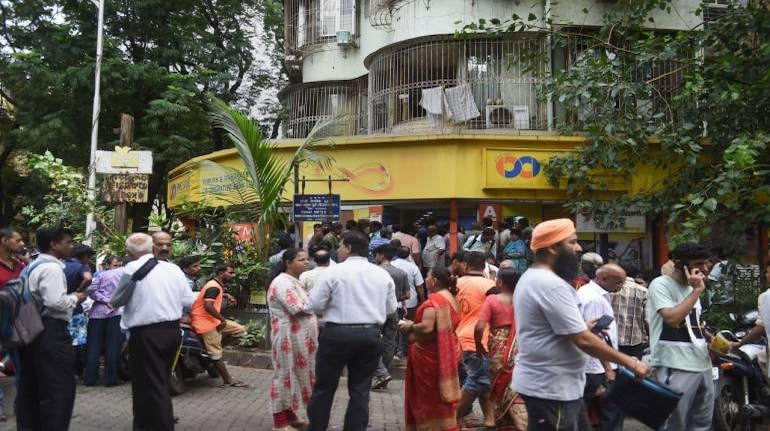
The imposition of restrictions on Punjab and Maharashtra Cooperative (PMC) Bank last year drew public ire when deposit withdrawals were capped overnight, leaving the bank’s customers in a frenzy.
“Keeping in view the experience gained, it has been decided to further rationalize the SAF to make it more effective in bringing about the desired improvement in the UCBs, as also the expeditious resolution of UCBs experiencing financial stress,” the RBI said.
Structured on the lines of Prompt Corrective Action (PCA) plan for scheduled commercial banks, the SAF has a set of triggers based on the asset quality, capital adequacy and profitability of the cooperative banks.
A UCB may be placed under SAF when its net non-performing assets (NPA) ratio exceeds 6 percent, capital adequacy ratio falls below 9 percent and if it incurs losses for two consecutive financial years or has accumulated losses on its balance sheet.
As per previous norms, the trigger on asset quality was set at 10 percent of gross NPA ratio.
However, RBI said it will not be precluded from taking appropriate supervisory action in case stress is noticed in other important parameters or in case of serious governance issues.
“Reserve Bank will also not be precluded from taking any supervisory actions other than those indicated in this circular, based on merits of each case,” the regulator said.
Under SAF, the bank’s board will have to submit a board-approved action plan for improving these parameters. There will be a restriction on declaration and payment of dividend or donation without RBI’s prior approval.
Other restrictions include lending restrictions to sectors with high defaults and incurring capital expenditures beyond specified limits. The UCB will also have to take measures to cut operating and administrative costs.
RBI said supervisory action will normally be initiated on the basis of the financial position of UCBs as assessed during the statutory inspection. Also, actions such as cancellation of banking licence may be considered by the regulator if necessary.
The health of scheduled urban cooperative banks (SUCBs) worsened in the second quarter, with fall in capital adequacy and rise in gross non-performing assets (NPAs), according to the Financial Stability Report released on December 27.
The capital adequacy ratio of SUCBs’was down 9.8 percent in the September quarter, from 13.5 percent in the March-ended quarter. Also, the gross NPA ratio rose to 10.5 percent from 6.4 percent in the same period.
In another report released last month, RBI said dual control with state governments hampered timely action against weak lenders in this category.
The RBI also said there was a need for an independent audit system while existing regulations were being reviewed to improve supervision for cooperative banks.
Discover the latest Business News, Sensex, and Nifty updates. Obtain Personal Finance insights, tax queries, and expert opinions on Moneycontrol or download the Moneycontrol App to stay updated!
Find the best of Al News in one place, specially curated for you every weekend.
Stay on top of the latest tech trends and biggest startup news.




