

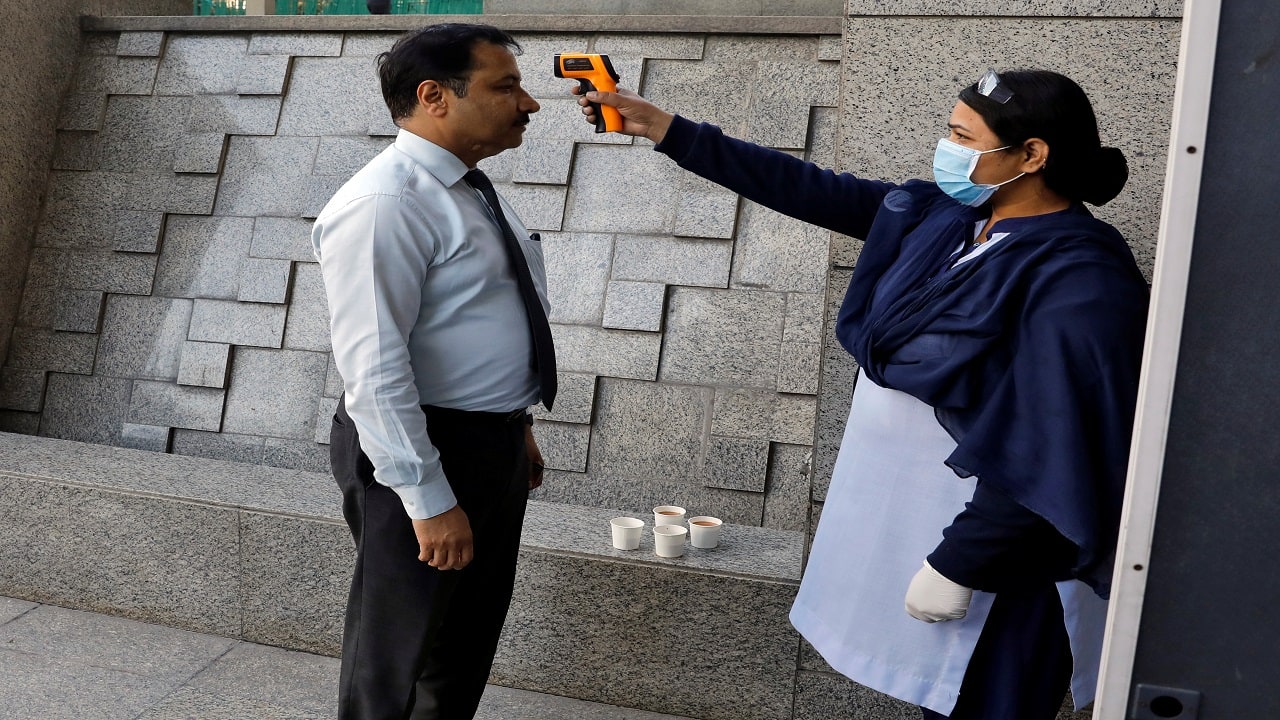
The World Health Organisation on Wednesday declared the novel Coronavirus Disease – or COVID-19 – a pandemic. It has now spread to 124 countries, and many governments have swung into action, imposing several restrictions on mobility, in a bid to contain the rampaging virus. In India, the central government took stringent measures, suspending visas issued, barring a few categories such as diplomatic and employment, until April 15. In addition, all Indians have been asked to avoid all non-essential travel abroad.
Follow our blog for LIVE updates on the coronavirus pandemic
In India, the tally of those who have tested positive now stands at 73. What does this mean for health and travel insurance policyholders?
Read on for answers to some commonly-asked questions.
Will my current health insurance policy cover COVID-19-related treatment?
The Insurance Regulatory and Development Authority of India (IRDAI) has already directed insurers to expeditiously process COVID-19-related claims in cases of hospitalisation, which is likely to make the process simpler for those who have regular health policies. But will things change, now that the WHO has labelled it a pandemic? “Hospitalisation for COVID-19 will be covered like any other illness. The expenses that are medically prescribed will get covered,” says Shreeraj Deshpande, Chief Operating Officer, Future Generali India Insurance. Most insurers have a similar approach. “All our health policies will cover the medical expenses incurred on hospitalization for Coronavirus. At present, our policies do not exclude epidemics and pandemics,” explains Subrata Mondal, Executive Vice President, IFFCO-Tokio General Insurance.
Central and state governments as well as local bodies have almost entirely taken care of the infected patients’ testing, quarantine and recovery so far. “Right now, the government is incurring the expenses, so insurers have a minimal role to play. However, if individuals who are covered under indemnity-based health policies have to pay from their pockets for their hospitalisation, insurers will have to reimburse,” says Amit Chhabra, Business Head, Health Insurance, Policybazaar.com. Indemnity-based health policies make good the actual expenses you have incurred on hospitalisation, either on a cashless or reimbursement basis.
If you visit a private hospital and are directed to a government facility on the basis of your symptoms, you will incur some charges. “If an ambulance is needed, the charges, to the extent allowed in the policy, will be paid for. But it could be restricted to one ambulance transfer during the entire treatment period,” says Ankit Sachdeva, Chief Technology Officer, Easypolicy, an online insurance aggregator.
New-age general insurer Digit has come up with a fixed benefit Coronavirus-specific policy, while IFFCO-Tokio is working on a focussed product. The regulator has already encouraged insurers to come up with such products. Digit’s product will pay the claim even if the government has paid for your medical expenses. It can come in handy to replace the loss of income, if any, though your priority should be to buy an adequate indemnity-based health cover.
What if I am quarantined at home?
In such cases, your cover is unlikely to get triggered. While health policies do cover domiciliary treatment – or treatment at home – they usually kick in only under extreme circumstances. “It is applicable if no hospital is available for the treatment, it is not possible to shift the patient to a hospital or there is no space in the hospitals. If such a condition arises, only then will the domiciliary treatment clause get triggered,” says Deshpande. On the other hand, if you have a health policy that covers outpatient department (OPD) expenses, home quarantine situations, too, will get covered.
Will the post-hospitalisation expenses be covered?
Health insurers typically cover post-hospitalisation expenses – including medicines and follow-up charges – up to 60-90 days after discharge. If you are hospitalised at a government facility, but have to incur expenses post discharge, your insurer will pick up the tab. “But such claims will be considered in light of hospitalisation details received, because post-hospitalisation expenses are linked to hospitalisation,” says Gurdeep Singh Batra, Head, Retail Underwriting, Bajaj Allianz General Insurance.
Will my travel policy come to my aid if I cancel my trip in view of the government advisory?
First, find out whether your tour operator or airline is offering a refund or free rescheduling.
Next, in the case of travel insurance, you will have to go through your policy documents to figure out if your cover allows you to do so. “Trip cancellation is covered under one of our travel insurance variants. If you have to cancel your trip due to the government advisory, you can file a claim,” says Batra. So, it is not only the insurer, but also the product that you have chosen that will play a role.
If I am travelling to a country where the government advisory is applicable and contract the virus, will my travel insurance policy pay my hospitalisation bills?
If you wish to travel now despite a specific advisory against a particular country (for instance, China, Japan and South Korea), you might not be issued a travel policy in the first place.
Now, COVID-19 or any other contagious epidemic is not listed as an exclusion in policy documents, so technically the hospitalisation expenses are payable. But, in other countries, too, the governments are in charge primarily, due to the requirement of quarantine and testing at specific labs. If you have purchased the policy and travelled before an advisory was issued, though, you will be covered. “It is not an exclusion, so it would be covered. However, we are not extending the policy tenure now,” says Deshpande.
If you have undertaken the journey despite advisories, however, your claim settlement could be in doubt. “Most travel policies have an exclusion clause pertaining to the advisories issued. If you travel despite the advisory, the hospitalisation claim related to COVID-19 will not be payable,” says Batra. The government has also asked travellers to avoid non-essential international travel. But if you cannot avoid the trip, you can check if an insurer will issue a travel policy for other expenses that it covers such as accidental injuries or baggage loss, for instance.
Discover the latest Business News, Sensex, and Nifty updates. Obtain Personal Finance insights, tax queries, and expert opinions on Moneycontrol or download the Moneycontrol App to stay updated!





