The recent goods and services tax (GST) exemption on life insurance premiums has reshaped the industry’s cost structure, delivering immediate relief to customers but placing a financial burden on insurers.
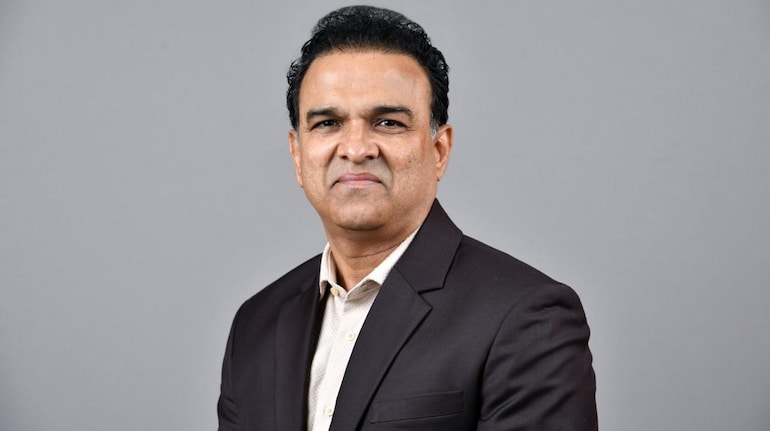
Aditya Birla Sun Life Insurance Kamlesh Rao managing director and chief executive officer says the move has made policies significantly cheaper yet the removal of input tax credit has created a hit to margins.
In an interview to Moneycontrol, Rao explains the impact of GST on insurers , the proposed 100 percent FDI and what Bima Sugam could mean for competition and customer experience. Edited excerpts of the interview:
The GST exemption on life insurance premiums is a major shift. How has the industry absorbed this change?
GST was made exempt for policyholders, reinsurance GST was also exempted but GST on agency services, which form the backbone of life insurance distribution, was not removed. This immediately created pressure because about 95 percent of life insurance business is sold through agents or intermediaries.
To explain the numbers from last year, the industry collected around Rs 22,900 crore in GST from customers. We used to claim between Rs 14,000 to Rs 15,000 crore as input tax credit, of which about Rs 1,000 crore was related to reinsurance GST that is now exempt.
With customer GST dropping to zero for individual policies, the entire input tax credit has become a cost for insurers. From a customer point of view, it’s a welcome move because products have become cheaper. In October, we noticed some uplift in industry growth but it’s too early to say that GST alone is driving accelerated demand. We will only know after observing four-five months of consistent data.
Insurers are adjusting their commission structures to accommodate the higher cost. The margin impact could be anywhere between 200 and 400 basis points. We would have preferred commissions being treated as zero category instead of exempt, so that at least some ITC could be claimed, similar to banks and NBFCs. Representations have been made but nothing has been accepted yet. Overall, the move is beneficial for customers but adds significant pressure on life insurers who now need to work on cost and distribution efficiencies.
Has the benefit been fully passed on to customers? How are agent commissions getting affected?
Yes, the entire benefit has been passed on. The additional burden is being absorbed by life insurance companies. For example, if a policy premium is Rs 100, earlier Rs 18 GST was collected. On a commission of Rs 20, GST used to be Rs 3.6. That Rs 3.6 can no longer be offset, so the cost effectively rises from Rs 20 to Rs 23.6. Companies are therefore revisiting their commission structures, some reducing commissions, some offering GST-inclusive structures, depending on their product mix.
We have also requested the regulator to allow amortisation of this additional cost under IFRS. If permitted, the burden on insurers will be lower in the initial years of a policy. A committee is reviewing this proposal.
How did ABSLI perform in October, which had both the post-GST phase and festive season?
We have been the fastest-growing life insurer for the first six months of the year, and that momentum continued in October and November. However, I cannot attribute this entirely to GST. The biggest GST benefit is in protection products where GST was 18 percent, whereas in savings products it was only 4.5 percent. While protection has shown improvement, it is not disproportionately higher yet. We need a few more months before we can draw firm conclusions.
The government is expected to table the insurance bill in the ongoing winter session, with major proposals such as 100 percent FDI and composite licences. What is your view?
More players always help improve industry penetration. However, when FDI increased from 49 to 74 percent, we did not see significant new investment. Capital inflow remained limited. This time, the change is accompanied by the removal of the requirement that management control must be Indian, which could attract more global insurers.
That said, distribution remain a challenge for any new entrant. Sixty percent of private sector life insurance business comes from bancassurance, and LIC is the only major insurer that thrives predominantly on an agency model. Foreign entrants will have to craft a viable distribution strategy to succeed.
As for composite licences, they allow companies to offer life, health, travel and property insurance under one entity. It increases customer engagement and operational flexibility. Within the Birla group, we already have a standalone health insurer, so we haven’t taken a final view yet but the concept is beneficial and could simplify the customer experience.
With open architecture for agents also being discussed, do you expect more foreign insurers to enter?
If agents are allowed open architecture, it will significantly change distribution. LIC, which has half the agents in the country, has valid reservations since they have built that network over decades. But if open architecture, 100 percent FDI and composite licences come together, the ecosystem becomes far more attractive to global players.
Some may choose non-bank distribution models but we will need to see how the final version of the bill shapes up.
With most taxpayers shifting to the new tax regime, will insurance demand be adversely impacted as tax incentives fade?
Tax benefits have not been the dominant sales driver for at least the past two years. Although we are often seen as a protection business, protection accounts for only 5-6 percent of the industry. Out of every Rs 100 paid out by life insurers, only Rs 9 is for death claims, while Rs 91 goes to living customers. Life insurance in India has evolved into a core long-term savings instrument.
Around 30-40 percent of the industry now operates on guaranteed products. No other instrument guarantees a return for 40 years. For premiums below Rs 5 lakh, which constitute 98 percent of the market, returns are still tax-exempt. After adjusting for tax, guaranteed products can offer the equivalent of an 8.5 percent return with 10 times life cover.
Annuities are also gaining traction. In our own business, annuities have grown from 2 percent to 8 percent in three years. For short-term returns, insurance is not the right choice but over 20-30 years, the compounding effect is powerful. Even if all taxpayers shift to the new regime, I expect the industry to continue growing at 10-12 percent annually for the next five to six years.
What is the latest update on Bima Sugam? How transformative can it be?
No insurer has started selling on Bima Sugam yet but it has the potential to be a transformational platform. It is essentially a unified industry infrastructure that will bring together data and processes for all insurers.
For instance, when underwriting a customer today, we only know about their life insurance history. We do not know if they have made health claims or frequent motor claims. Bima Sugam will allow aggregated data across life, health and motor. This improves underwriting and enhances risk assessment dramatically.
It will also reduce unclaimed money, which is a priority for the government. A central platform will ensure customers and insurers can trace unclaimed amounts easily. Persistency will improve because insurers will know whether customers are paying elsewhere but not to them.
Customer servicing, claims and complaints will become easier. Initially, the platform may host only standard products because Bima Sugam cannot rank or compare non-standard products without bias. Over time, more products may be added.
We are also considering introducing a bundled product called Bima Vistar when the platform launches. It could combine life, health and property cover into a single standardised offering available through any insurer.
What will drive ABSLI’s growth?
Our aim is to double the business every three years and we have consistently achieved this. Our strategy is anchored in product innovation. For example, we introduced guaranteed plans that start paying income immediately instead of after 10 years. We have also developed market-linked products that offer meaningful protection, rather than the standard 10x cover available in traditional ULIPs. Annuities are another strong growth area for us.
Discover the latest Business News, Sensex, and Nifty updates. Obtain Personal Finance insights, tax queries, and expert opinions on Moneycontrol or download the Moneycontrol App to stay updated!

Find the best of Al News in one place, specially curated for you every weekend.
Stay on top of the latest tech trends and biggest startup news.