




 A petrol attendant stands next to a newspaper headline in Pretoria, South Africa, Saturday, Nov. 27, 2021. As the world grapples with the emergence of the new variant of COVID-19, scientists in South Africa — where omicron was first identified — are scrambling to combat its spread across the country. (AP Photo/Denis Farrell)Vineeta Bal, Indian Institute of Science Education and Research, PuneQ: What is your take on this South African variant, which seems to have come out of nowhere? It certainly has caught some countries in Europe where travel is being restricted again, by surprise.
A: Viruses mutate. RNA viruses mutate more often than DNA viruses do. SARS-CoV2 is an RNA virus, and it has been mutating over the past 20-plus months. So, these mutations are not surprising. Even more new variants can emerge in the future. In terms of Science this is not a surprise.
Q: What further steps should the government take to safeguard the population against this variant? Is monitoring tourists one of the options?A: Apart from strict surveillance, especially screening international travellers and rapid sequencing, there isn't much that can be done for now. As and when individuals infected with this variant get identified, they should be tracked, contacts tested and isolated, if necessary. We need to continue using masks, keeping distance between individuals etc. Of late these measures are not being followed well, and that needs to be enforced.
Q: Even though it is still early to arrive at a conclusion, how does the threat perception vis a vis India play out, where more than 50 percent of the population has not been double vaccinated and the people at large appear to have lowered their precautionary levels?A: Fully-vaccinated adults are likely to maintain some level of protection even from the Omicron variant. I do not see vaccines or prior infection mediated immunity becoming completely useless. However, in India, and in other LMICs (low to middle income countries) many, many individuals eligible for vaccination are yet to receive the first dose and/or complete vaccination. They will be at much higher risk than the fully vaccinated ones.

A: Yes, as I mentioned above, emergence of further variants is a distinct possibility in the future. Rapid global vaccine coverage is critical; insisting on a further booster dose is less critical.
Also Read: How Omicron, the New COVID-19 Variant, Got Its Name
Dileep Mavalankar, Head - Indian Institute of Public Health, Gandhinagar, GujaratQ: This new South African variant appears to be travelling. Could it also reach Indian shores?A: Well, if this South African variant can go to Hong Kong and Israel, there is no reason why it can’t come to India. Our sequencing is backdated, and the government is not releasing sequencing data; neither is it declaring how many people are hospitalized, even though data for deaths are being reported.
Q: How is India’s quarantining system?A: A lot depends upon how efficient our quarantine system is and how passengers coming from the Middle East on connecting flights from South Africa have been screened in the last two weeks. Our quarantine system leaves much to be desired.
A: I was at a function yesterday, ostensibly aimed at spreading awareness about the virus, and there was no one wearing masks and there was little ventilation. So, I would say that our guard has to be up, and we simply cannot afford to become complacent.
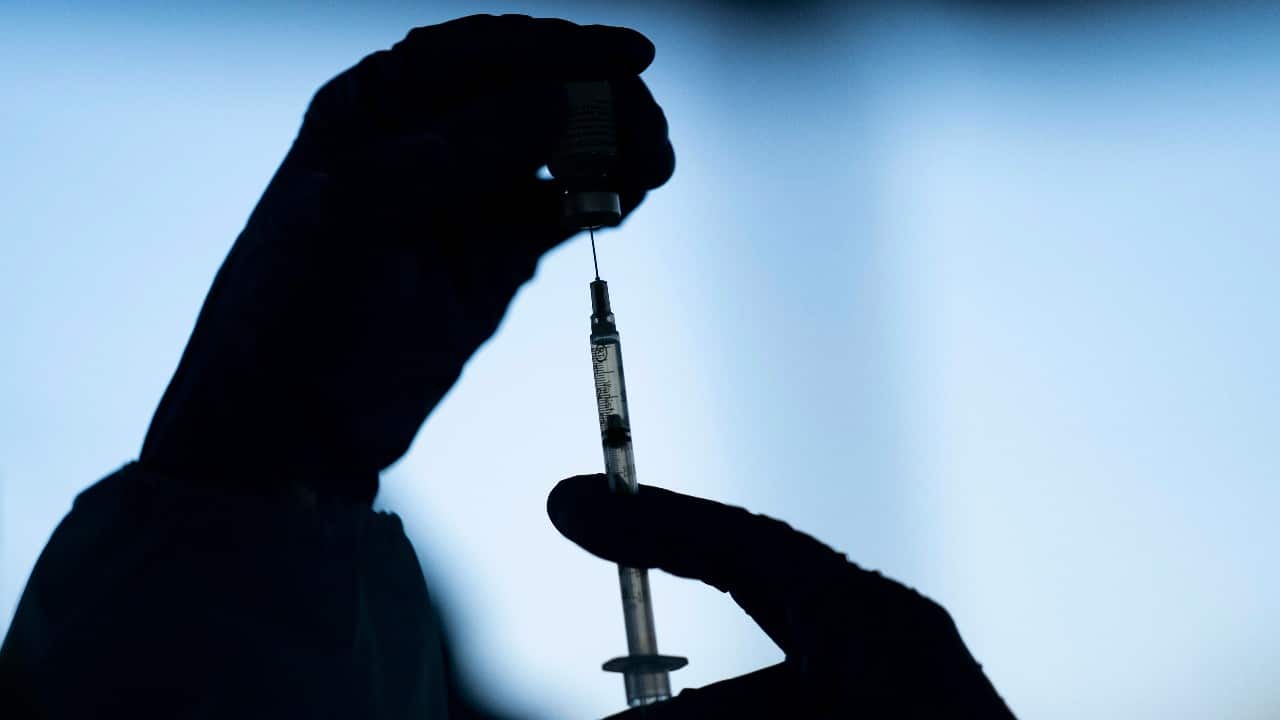 A medical staff member prepares the Pfizer COVID-19 vaccine at Tudor Ranch in Mecca, Calif., on Jan. 21, 2021. In a statement Sunday, Nov. 28, 2021, California's public health officer, Dr. Tomas J. Aragon, said that officials are monitoring the Omicron variant. There are no reports to date of the variant in California, the statement said. Aragon said the state was focusing on ensuring its residents have access to vaccines and booster shots. (AP Photo/Jae C. Hong, File)Prabhat Jha, Founding Director - The Centre for Global Health Research at St. Michael’s Hospital in TorontoQ: What is your take on this latest South African variant, which seems to have come out of nowhere? It certainly has caught some countries in Europe by surprise, where travel is being restricted again.
A: The variant is called Omicron. It was not out of nowhere. Vaccine coverage in South Africa is below 35 percent and for the whole of Africa less than 10 percent, so unvaccinated populations anywhere- including in India - are where variants grow and spread.
Q: What further steps should the Indian government take to safeguard the population against this variant? Is monitoring tourists one of the options?A: Don't ban travel- doesn't work. But testing on arrival and quarantine for seven days or so of any travellers from the region would be a short-term plan. Rapidly expanding genotyping in all parts of India is crucial. The current PCR tests happen to pick up a signal of Omicron so widespread early reporting of these PCR results in India is a priority.
A: Vaccination levels must rise and a big push to get all unvaccinated with at least one dose is the overwhelming priority. The Prime Minister should be doing nothing else day or night for the next three months.
Q: Is it also likely that there could be more variants that have not yet been identified?A: Yes- the unvaccinated are variant factories. So, vaccinate all Indians.
Also Read: Omicron reportedly has 30+ mutations in spike protein region, may bypass vaccines: AIIMS chiefRakesh Mishra, Director - Tata Institute for Genetics and SocietyQ: How do you see this South African variant, which has put the focus back on coronavirus?A: More and more variants, like this South African variant, will emerge. That is the story of all viruses; there could be hundreds of variants, but they are not noticed. Since this one is spreading fast, it has come to attention immediately. It is still a bit early to arrive at a conclusion; quite possibly it may have spread from a super spreader but we will know more when data is available and sufficient.
Q: What are the main precautions needed?A: It is very important that we take precautions, both at the level of the government as well as individuals. At the level of government, there is already surveillance and monitoring, which is very crucial. At the level of individuals, we need to take adequate precautionary measures, people should get both their doses of vaccinations in time and wear masks all the time. In their absence, an individual is totally vulnerable.
A: Not just India, roughly 3 billion people in the world, particularly in Africa, have no access to vaccines. India is better placed because a large part of our population has been vaccinated at least once. This South African variant is a good reminder to the people that coronavirus has not gone away yet. It is a reminder to the people to take ample precautions and not feel that the virus has come to an end.
Dr Alex Thomas, National President - Association of Healthcare Providers (AHPI)Q: There is suddenly a buzz about Omicron, a virus which appears to have emerged in South Africa.A: I believe the world is going into a panic mode. The most important thing to see here is the effectiveness of the disease. So, I would suggest let us wait and watch.
Q: But infections could travel really fast. Before we know, it can hit us.A: Again, I would say there is no need to panic so soon. For all you know, it could be like the common cold, a milder infection after so much of the Indian population has been vaccinated.
Discover the latest Business News, Sensex, and Nifty updates. Obtain Personal Finance insights, tax queries, and expert opinions on Moneycontrol or download the Moneycontrol App to stay updated!



