




India inched a step closer to its One Sun One World One Grid (OSOWOG) mission when it signed a memorandum of understanding (MoU) with Saudi Arabia on October 8. The MoU intends to build international grid connectivity between the two nations, share knowledge and technology in green hydrogen, and create a supply chain for the overall expansion of new and renewable energy.
Experts said the agreement is significant as cooperation on building electricity interconnection between the two nations will also pave the way for quick and easy exchange of electricity during peak times and emergencies.
“Both India and Saudi Arabia hold critical positions in the global energy landscape, and this move is expected to deepen the energy alliance between the two nations to foster collaborative development in the areas of renewable energy, energy efficiency, hydrogen, and grid interconnections,” Anish Mandal, Partner, Deloitte India, told Moneycontrol.
Vikram V, Vice President and Sector Head - Corporate Ratings, ICRA, said the MoU could enhance Saudi Arabian investments in Indian renewable energy, green hydrogen, and allied sectors.
“While the MoU talks about electricity connectivity between the two countries, the feasibility and economic viability of the same remains to be seen,” Vikram told Moneycontrol.
The Indian government had projected a peak power demand of 230 gigawatts (GW) in the fiscal year 2023-24, but in reality, demand soared to an unprecedented 240 GW, with a peak deficit of 10.74 GW.
For 2024-25, the government is anticipating a peak demand of 256.53 GW. Overall, India’s power demand is expected to increase at a compound annual growth rate (CAGR) of about 6 percent, per the Central Electricity Authority (CEA).
Additionally, India has also set an ambitious target of generating at least 500 GW from renewable energy sources by 2030 (up from 171 GW now), and going net zero by 2070. This means a large chunk of India’s power demand will have to be met by renewable energy, which currently has an issue of intermittency in the absence of storage solutions.
International grid connections can help solve this problem by transmitting, say, solar power from the West when the sun shines there, to India, when it’s dark. It also helps in stabilising the supply of hydropower, which is highly seasonal.
What is OSOWOG?On November 2, 2021, the OSOWOG mission was jointly released by Prime Minister Narendra Modi and former UK Prime Minister Boris Johnson at the COP26 Climate Meet in Glasgow, to reduce the carbon footprint and energy costs. The aim of OSOWOG is to help develop a worldwide grid through which clean energy can be transmitted anywhere, anytime.
It also aims to help reduce storage needs and enhance the viability of solar projects. The idea for the OSOWOG initiative was first put forth by Modi at the First Assembly of the International Solar Alliance (ISA) in October 2018.
Transnational grid connectivity will also improve the reliability of power grids of the participating nations. At a time when energy security has become a key priority for every country due to the ongoing Ukraine-Russia war, transnational grids offer a long-term strategy for economic and energy security goals.
What is the grid-connectivity plan between India and Saudi Arabia?Although the MoU doesn’t specify the details of the grid connectivity, it states that a Joint Working Group (JWG) would be constituted, co-chaired by a joint secretary of the Indian Ministry of Power, and the deputy minister from the energy ministry of the Saudi government. The JWG would conduct the necessary feasibility studies (technical, economic, and environmental) for interconnection between the two countries.
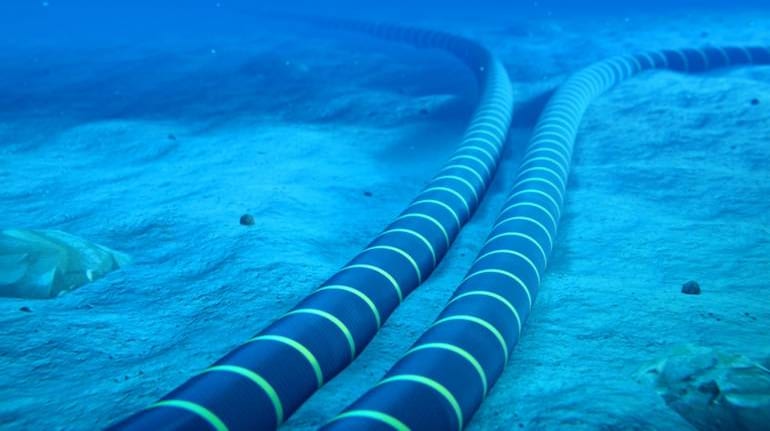
Senior officials in India’s Ministry of Power said the preliminary plan is to link the Indian power grid with those of Saudi Arabia and the UAE through subsea cables from its west coast.
Does India have any transnational grid connectivity currently?Yes, currently India is connected through grids with Bangladesh, Bhutan, Nepal, and Myanmar. The cumulative capacity under operation is 4,433 MW, per government data accessed by Moneycontrol.
The biggest transnational connection India has at present is with Bhutan, with a capacity of 2,070 MW. This is followed by the India-Nepal grid of 1,200 MW and the India-Bangladesh grid of 1,160 MW. India-Myanmar is a minor grid with a capacity of only 3 MW.
Grid connectivity plans with other nationsIndia is already in talks with Maldives for the transfer of renewable energy between the two nations.
The India-Sri Lanka power line project is also in advanced stages of discussion. The two countries expect to exchange 500 MW of power through the proposed line. The detailed project report for the same is currently under review.
The Indian government is also trying to expand its existing grid-connectivity with Myanmar, and hopes to extend it to Thailand.
There are plans to connect with the power grid of Singapore, from the east coast. India is also in talks with Singapore to get connected with the ASEAN grid.
Besides, discussions are also going on with the UAE for grid connectivity, through which India is aiming for inter-continental power exchange, extending its links to Europe via the Middle East.
A task force set up by the Ministry of Power is examining the feasibility of interconnecting the regional grids of Southeast Asia, south Asia, the Middle East, Africa, and Europe for sharing renewable energy.
Discover the latest Business News, Sensex, and Nifty updates. Obtain Personal Finance insights, tax queries, and expert opinions on Moneycontrol or download the Moneycontrol App to stay updated!
Find the best of Al News in one place, specially curated for you every weekend.
Stay on top of the latest tech trends and biggest startup news.




