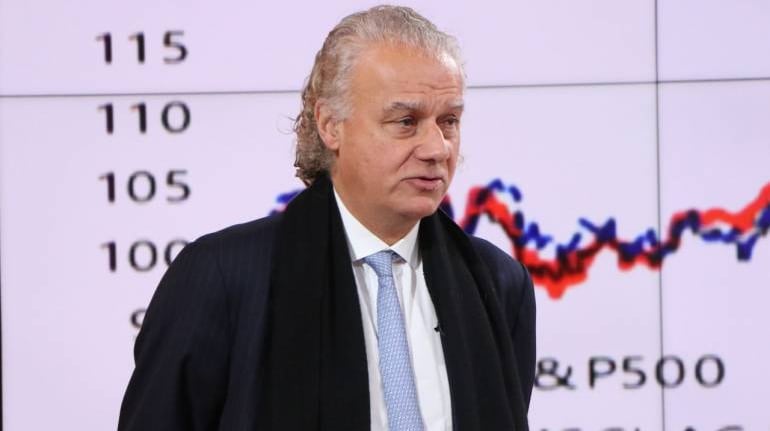
In its latest instalment of the GREED & fear newsletter, Christopher Wood, the global head of equity strategy at Jefferies has marked out India's potential for renewed outperformance in an Asian and emerging market context.
"The valuation differential between India and China has reverted to its traditional mean after the huge 65% outperformance of MSCI China over MSCI India since the end of October 2022 to late January following the China re-opening...This sets up the potential for renewed outperformance by India in an Asian and emerging market context" the newsletter states.
Wood goes on to laud the domestic SIP inflows into the Indian markets arguing that these flows are stickier and represent a "structural positive" compared to "retail punters" participating via derivatives.
"It is certainly impressive that, despite US$2.8bn of foreign net selling of Indian equities year to date, domestic equity mutual fund inflows have remained positive with the latest data showing a renewed
pickup. Net inflows into equity mutual funds rose from Rs110 billion in December to an eight-month high of Rs 186 billion in February, after bottoming at Rs42 billion in November. Most of these inflows continue
to come from the Systematic Investment Plan (SIP) where monthly inflows are debited from salaries. SIP inflows rose from Rs136 billion in December to a record Rs139bn in January and Rs 137 billion in February. Naturally, such inflows are stickier than the activity of retail punters speculating via derivatives and represent an ongoing structural positive for the stock market."
Also read: Chris Wood sees India as a much more straightforward, long-term story than China
Strength in the private banking ecosystem
Wood in the newsletter indicates that the domestic demand story is intact and is captured in the healthy loan growth and the rising opex of Indian private banks.
"The domestic demand story certainly remains intact to justify the continuing belief in the equity market. Loan growth has slowed somewhat but still remains solid at 15.5 percent YoY in late February, down from 18 percent YoY in early October. The confidence of Indian private banks is reflected in operating expenditure (opex) growth rising by 21 percent YoY in FY22 and 23 percent YoY in the three quarters to December, the highest growth rate in ten years. This includes investment both in digital platforms and the expansion of new branches." the newsletter states.
Real estate on the recovery path
The newsletter goes on to indicate that the recovery in the residential property market also continues even as mortgage rates have risen to 8.7 percent.
"Primary residential sales in the top seven cities monitored by consultant PropEquity rose by 7 percent YoY in January, while inventory in the top seven cities is at 10-year lows running at 18 months of sales. The average selling price increased by an estimated 10.2 percent YoY in the top seven cities in 1QCY23. Affordability also remains satisfactory. The housing affordability ratio, measured as the home loan payment-to-income ratio, is estimated by Jefferies’ India office to have risen from the low of 27 percent in FY21 to 35 percent in FY23 and 37-38 percent in FY24assuming a mortgage rate of 9.5-10 percent. This remains below the average of 40 percent between FY01 and FY22," the newsletter adds.
Animal spirits reviving in India
Wood cites the "continuing strong GST revenues and buoyant retail sales" as evidence of economic resilience and reviving animal spirits in India. GST collections rose by 12 percent YoY to Rs1.5 trillion in February and were up 23 percent YoY to Rs16.5 trillion in the first 11 months of this fiscal year (April 2022 – February 2023). While the Retailers Association of India reported that retail sales in February were 22 percent higher than the pre-Covid February 2020 level, and were up 18 percent in the first 11 months of this fiscal year.
Challenges remain
Having identified the strong points working in India's favour, Wood goes on to mark the challenges that lie ahead for the Indian markets, while simultaneously pointing out that a sizable portion of the Asia ex-Japan long-only portfolio will be invested in India.
"The challenge, as always in India, remains relatively high valuations. The Nifty Index is on 17.4x earnings on a 12-month forward basis, compared with a long-term average of 16.2x since 2008. While Nifty earnings are forecast by consensus to grow by 9.7 percent this fiscal year and 20.7 percent in FY24. GREED & fear will remain slightly Overweight India in the Asia Pacific ex-Japan relative-return portfolio. But in the Asia ex-Japan long-only portfolio, which is long term by nature and less benchmark focused, a dominant 39 percent of the portfolio remains invested in India."
Private-sector capex cycle due
GREED & fear believes that a private sector capex cycle is now due, if not overdue, in India.
"A private sector-led capex cycle is now due, if not overdue, given
that the banking system is healthy in terms of an eight-year low in the NPL ratio, the corporate sector is unleveraged and profitability is rising in terms of listed companies’ ROE. India gross NPLs have declined from 11.2 percent in FY18 to an estimated 4.7 percent in FY23, the lowest level since FY15. Private non-financial corporate debt has declined from 78% of GDP at the end of 2012 to 52 percent, while the gross debt-to-equity ratio for the 600 large listed companies is now only 0.6x, down from 1.0x in FY15. Finally, the MSCI India’s ROE has risen from 9.8 percent in FY20 to 15.3 percent in FY22 and an estimated 13.2 percent in FY23 ending 31 March," Wood marked out in the newsletter.
Discover the latest Business News, Sensex, and Nifty updates. Obtain Personal Finance insights, tax queries, and expert opinions on Moneycontrol or download the Moneycontrol App to stay updated!

Find the best of Al News in one place, specially curated for you every weekend.
Stay on top of the latest tech trends and biggest startup news.