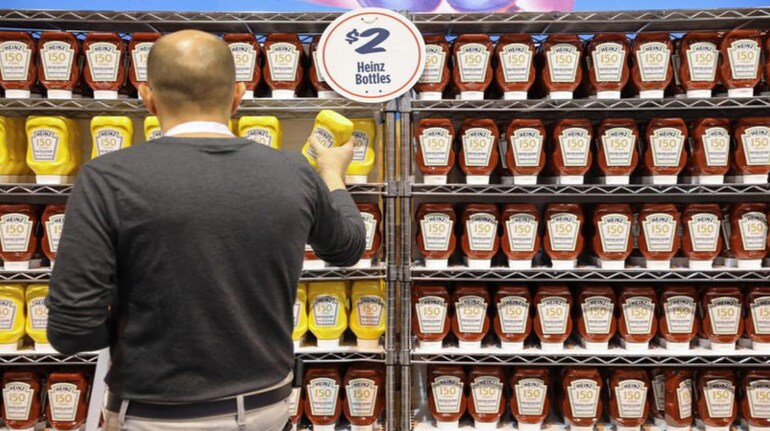
Kraft Heinz is considering spinning off much of its grocery business—most of the legacy Kraft brands—into a separate company worth up to $20 billion, people familiar with the plan said. The move is an extreme reversal for a firm hailed as the future of American food by billionaire investor Warren Buffett and Brazilian private-equity house 3G Capital, the Wall Street Journal reported.
The split is also part of a broader strategy to restore growth by focusing on trendier, faster-growing categories like dressings, sauces, and condiments. The other Kraft Heinz company would include traditional brands such as Heinz ketchup and Grey Poupon mustard, while the new firm would consist of slower-moving categories like processed meat, packaged meals, and some Kraft-named staples.
A megamerger that lost its flavour
When Kraft and Heinz merged in 2015, the consolidation held out for dramatic efficiency, global scale, and revitalized brand clout. Buffett and 3G Capital envisioned it as the ideal packaged food move. But in a matter of years, the strategy unravelled. 3G's much-vaunted "zero-based budgeting" didn't pay off in the end. In 2019, the company charged down the value of its Kraft and Oscar Mayer brands by $15 billion.
Sales have since levelled off, profits declined, and the stock dropped more than 60% from merger peaks—erasing $57 billion of market value. Friday's 2% gain in the stock, following news of the potential breakup, was a lone bright spot in an otherwise dismal decade for investors.
Changing tastes, rising costs
Kraft Heinz's signature brands—mac and cheese, mayonnaise, cold cuts—are not so hot anymore. As consumers gravitate more toward fresher, less processed fare, the company has not followed. It has promised to eliminate artificial colouring from American products and has attempted to sell struggling brands like Oscar Mayer and Maxwell House, without success.
The shift to de-merge its slow-growth and high-growth businesses is an example of a plan unfolding across the food industry. Kellogg's de-merger in recent years into Kellanova and WK Kellogg, and this week's sale by the latter to Ferrero for $3 billion, suggests the need for leaner food portfolios in the industry.
Buffett's shadow and 3G's exit
Berkshire Hathaway holds Kraft Heinz's biggest stake at 28%, but Buffett recently divested his firm's boardroom seats. 3G Capital, the mastermind of the merger, long absent from the scene, formally gave up ship at the end of 2023. Their departures, along with current asset sales in Italy and other international markets, signal a company ready to start fresh.
Kraft Heinz has yet to finish the spinoff plan, and it is still negotiating with its board and advisers, sources caution. But the lines of the deal—two independent companies, a simplified structure, and a more concentrated brand strategy—mark a clear break with the era of megamergers.
The future of Big Food
As inflation tightens food budgets, store-brand competition rises, and the government takes aim at processed foods, Big Food is in chaos. Kraft Heinz's expected breakup is not just a company restructuring—it's a sign of how consumer preferences and investor expectations are reshaping an entire industry.
As President Willem Brandt put it earlier this week, “We’re intentionally and proactively managing our portfolio.” For Kraft Heinz, that may finally mean admitting that bigger wasn’t better after all.
Discover the latest Business News, Sensex, and Nifty updates. Obtain Personal Finance insights, tax queries, and expert opinions on Moneycontrol or download the Moneycontrol App to stay updated!

Find the best of Al News in one place, specially curated for you every weekend.
Stay on top of the latest tech trends and biggest startup news.