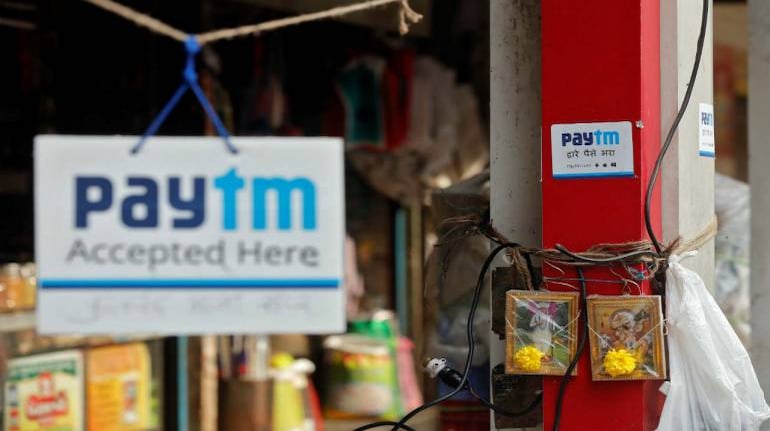
“We have the customer and merchant on our own platform. We don't go to the National Payments Corporation of India (NPCI) to make a transaction and switch,” Paytm founder Vijay Shekhar Sharma said in an interview with CNBC-TV18 recently to emphasise that Paytm does not need NPCI to execute transactions.
A few days before that, at a press conference ahead of the Initial Public Offering (IPO), Sharma had reiterated that UPI (Unified Payments Interface) is not the sole focus for the company.
This is a clarification that Sharma has repeatedly given over the years while being vocal about how UPI does not yield any revenue as no charges are levied on these transactions.
In fact, judging Paytm’s share in the payments space, solely by UPI numbers, is rather irksome for him as he has expressed several times.
For Paytm, UPI is just one of the options on its platform for customers to pay, apart from QR Code and its flagship Paytm Wallet. We take a look at why Paytm does not want to focus on UPI and what is the strategy for the Dalal Street-bound company in the payments space.
Wallet vs UPI: Paytm’s perspectiveAccording to Sharma, comparing PhonePe or Google Pay's UPI data to Paytm's does not give the whole picture. "We are the number one player. Payments between customers and merchants happen through various modes. UPI is just one of the modes that we don't use as the obligatory mode," Sharma had added.
Paytm has its own payments gateway, meaning it can process debit cards, credit cards, wallets and net banking transactions on its own platform. When payments are made using UPI, the transaction is routed through NPCI where the transaction is recorded.
Hence, payments made through Paytm Wallets or QR codes, which have a higher share of overall payments for the platform, do not reflect in NPCI data. The company also earns a transaction fee, charged for payments on its own platform, while for UPI payments, there is no revenue.
The other difference is that operating a wallet, which is a prepaid payment instrument (PPI), requires a licence from the Reserve Bank of India (RBI), while UPI payments do not require a licence. It competes with other e-wallet players like Mobikwik, PhonePe, Axis Bank-owned Freecharge and banks in the space.
“Wallet will always be Paytm’s strong point. If you have a PPI licence from the RBI, the strategic intent of UPI is much harder to justify,” said an industry source.
Paytm’s strategic intent is clear: it prefers payments over its own platform rather than routing it through other platforms. In other words, it prefers to follow a single-party system where all transactions across categories happen using its own platform, as opposed to a complex multi-party system that involves multiple platforms.
“In a multi-party transaction, it will go through multiple hops before it gets completed. In that, success rates are lower, the time taken to execute the transaction is higher, versus doing everything on your own servers. Given all that, it is not surprising that Paytm has taken a wallet-plus UPI approach,” added the source.
UPI exists on Paytm’s app to provide flexibility to customers as well as an additional mode of payment if they choose to use it.
The payments businessPaytm continues to be the third-largest UPI player through its subsidiary Paytm Payments Bank. However, the difference between the number of transactions on its platform and that of leader PhonePe is substantial.
As per the latest data from NPCI for October, PhonePe saw 193 crore transactions -- over three times higher than Paytm’s 63 crore. While PhonePe enjoys a volume share of 47 percent in monthly UPI payments, Paytm has a 15 percent share.
For players like PhonePe, UPI is a crowd-puller, using which it can cross-sell other products on its platform like insurance, digital gold, bill payments etc. Similarly, Google Pay, too, serves as a UPI platform first and then gives customers the choice to buy and sell gold or make fixed deposits.
But when it comes to the person-to-merchants (P2M) payments, Paytm leads the market. P2M payments refer to transactions made by individuals by paying a merchant (online and offline stores or brands) while making purchases.
According to the company’s Red Herring Prospectus (RHP), Paytm made up 40 percent of P2M transaction volumes in FY21. Of these, overall P2M transactions, the ones which are made through wallets are dominated by Paytm with a 65-70 percent share.
Within UPI too, Paytm has the highest market share in UPI beneficiary transactions, which means that more UPI payments are being accepted through Paytm's UPI platform and this indicates that more merchants have adopted UPI through Paytm in comparison to other apps. The company’s share stood at 17.4 percent in July 2021, as per a Motilal Oswal report.
Overall, Paytm is the largest payments platform in India with a Gross Merchandise Value (GMV) of over Rs 4 trillion in FY21, according to Redseer data quoted in the RHP.
Will the strategy pay off?The numbers clearly show that UPI’s adoption has surpassed all modes of small-ticket digital payments. FY21 saw 2,233 crore UPI transactions as compared to only 494 crore PPI transactions.
The value of transactions, too, is starkly different with Rs 41 trillion worth of transactions done via UPI and close to Rs 2 trillion worth of transactions through PPIs in FY21, as per the Motilal Oswal report.
Regulatory changes, too, are set to change the wallet space after RBI mandated interoperability for all full-KYC PPIs to promote optimal utilisation of payment instruments. These guidelines that come into effect on March 31, 2022, will allow users to withdraw money from wallets or transfer money among wallets of various platforms
Additionally, the RBI has increased the limit of outstanding balance in PPIs from Rs 1 lakh to Rs 2 lakh. While these norms are largely seen as a positive for wallet players, will the possibility to withdraw money become a concern?
“It will all come down to the service they offer rather than volumes. The fight should be over how smooth and fast the execution of transactions is rather than saying that now that you have entered my house, I will not let you talk to anyone outside of here,” explained another industry source.
If the service is good, the new norms will be positive for wallet players. The ones who are doubtful about their offering will be worried about customers withdrawing from their wallets rather than using them for payments, he added.
Hence, only time will tell if not putting more eggs in the UPI basket will pay off for Paytm or not as the regulatory and payments landscape evolves.
Discover the latest Business News, Sensex, and Nifty updates. Obtain Personal Finance insights, tax queries, and expert opinions on Moneycontrol or download the Moneycontrol App to stay updated!
Find the best of Al News in one place, specially curated for you every weekend.
Stay on top of the latest tech trends and biggest startup news.