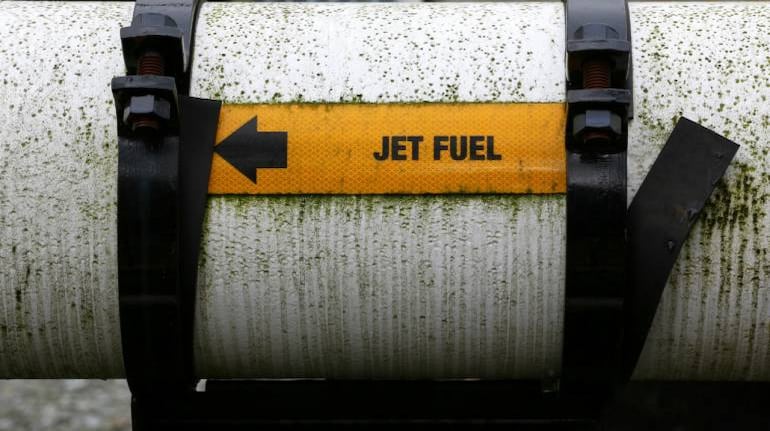
The Indian aviation industry has again urged the ministry of civil aviation to raise the caps on domestic fares, given the sharp increase in the prices of aviation turbine fuel (ATF) in the past six weeks. Airline companies are also planning to raise the fares for periods when the price band is not applicable. The price bands apply on bookings made for travel within a fortnight.
ATF prices have climbed 22.3 percent since December 15, or by Rs 16,497.38 per kilolitre (kl) in Delhi. The latest increase of 5.2 percent was announced on February 15. ATF now stands at around Rs 90,519.79 per kl in Delhi.
“This is the fourth hike in ATF price since January and is now becoming a cause for concern for the revival of the sector. Airlines have no options but to pass the costs to the passengers,” a senior airline official told Moneycontrol.
He said that airlines had requested the aviation ministry to either raise domestic fare caps or remove them as it would then enable the industry to pass on the rising costs.
Market experts also said that it has become difficult for airlines to operate under the current fare caps and still maintain operating efficiencies, given that ATF accounts for about 30-35 percent of the operational costs.
Costlier jet fuel is expected to hurt airlines as it will put further pressure on already stressed balance sheets at a time when competition is expected to intensify with the launch of two new airlines and the relaunch of Air India by the Tata group.
India has among the highest rates of taxation on ATF, driving up the fuel cost component.
Impact on airfaresMarket experts expect the rise in ATF prices to first be seen in the prices of tickets on popular tier-I routes that are recovering the fastest since the outbreak of the third wave of COVID-19 in India.
However, the biggest hike is expected to happen on regional routes, which are still operating at below pre-COVID levels and are expected to recover slower than popular routes.
Most market experts and industry insiders expect airlines to hike airfares on popular tier-I routes by around 15-20 percent by mid-March and expect a 20-25 percent hike in the prices of air tickets on regional routes by the end of March.
“The airfare range for flying between Delhi and Mumbai, for instance, is likely to rise from around Rs 2,300- 13,000 currently to around Rs 2,900- 15,000 by March,” a senior airline official said.
Additionally, the January-March quarter is a relatively less busy season for non-business travel.
While air ticket prices in India are still regulated by the ministry of civil aviation, airlines are free to set prices of tickets beyond a 15-day period from the date of booking.
How will the ATF price hike affect airlines?Higher fuel prices will not only hit the bottom line of airlines in the January-March quarter, it will also limit airlines’ ability to operate extra flights in order to save costs, but multiple market experts also said.
“With airlines already operating at a lower passenger load factor when compared to pre-COVID levels, the ATF price hike will further stress airlines’ finances,” an analyst at a domestic aviation consultancy said.
Experts added that some airlines will even struggle to pass on increased operating costs to passengers due to competition and fear of losing out on market share.
“With two new airlines expected to be launched in India in the next two months and Air India’s revival, competition in the sector is expected to be at an all-time high in the upcoming summer schedule,” an aviation analyst from Goldman Sachs said.
He added that if things remain unchanged and ATF prices remain high, the balance sheets of domestic airlines in India are expected to get weaker by the end of 2022-23.
Some airlines are also looking at alternatives to reduce the burden of ATF price hikes but are hard put to find other options.
“Airlines in India spend 40-50 percent more on ATF prices as compared to international airlines. As international operations are closed, airlines don’t even have an option to buy ATF at a cheaper rate from abroad,” another senior official from a domestic airline said.
Why are ATF prices rising?Jet fuel prices are revised on the 1st and 16th of every month based on the average price of the international benchmark in the preceding fortnight. The increase in rates reflects a rise in international crude oil prices in the last 15 days.
Crude oil prices have been on the rise as the Omicron variant has once again forced countries across the world to adopt restrictions to contain its spread.
Compared to the same period last year, ATF prices have risen more than twofold from Rs 40,783 in January 2021 to around Rs 90,519.79 per kl in Delhi on February 15, 2022, data from the websites of oil marketing companies shows.
Discover the latest Business News, Sensex, and Nifty updates. Obtain Personal Finance insights, tax queries, and expert opinions on Moneycontrol or download the Moneycontrol App to stay updated!
Find the best of Al News in one place, specially curated for you every weekend.
Stay on top of the latest tech trends and biggest startup news.