




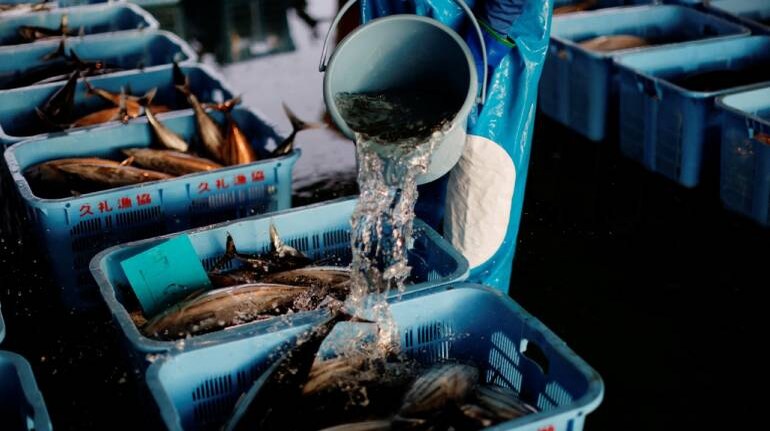
A sharp fall in demand has hit prospects of bumper Christmas and New Year seafood shipments from India, denting hopes of bettering the record exports achieved last year.
In one of the worst setbacks in recent years, India is facing reversals in all the major importing countries of the US, China, Europe and Japan. The US is the biggest market for Indian seafood, followed by China.
After reaching a new peak of $7.76 billion in 2021-22, India had set a target of $8.6 billion in seafood exports for the current fiscal year. This looked attainable going by the encouraging trend in the first few months. But from August the seafood industry had to contend with strong headwinds.
Also Read: India’s seafood exports may miss $8.6 billion target on recession in US, Europe, China lockdownsA slew of factors like rising inflation, a looming recession, excess stock, fuel crisis, the Russia-Ukraine war and its attendant problems, and the after-effects of COVID-19 have combined to take a heavy toll on Indian seafood exports. “Demand is down by 30-35 percent and if it doesn’t pick up by January, it could be a catastrophe,” said Jagdish Fofandi, president of the Seafood Exporters Association of India.
Cold storages are full in both producing and consuming regions, forcing exporters to cut back on purchases from aquaculture farmers. They feel the situation was better during the pandemic when supply was well short of demand. The surge in demand had a positive effect on prices, prompting farmers to produce more last year. Aquaculture shrimp accounts for the major chunk of the country’s seafood export basket.
“We have stopped buying seafood from the farms as there is no demand. The prices have crashed. I haven’t seen such a situation in the last 40 years or so,” said Tara Ranjan Patnaik, MD of Falcon Marine Exports, a Bhubaneswar-based firm that also has its own aquaculture farm.
According to Fofandi, Indian seafood exports slumped by 15-20 percent in the second quarter. “Global shrimp prices have fallen by 20-25 percent. This would have been okay if there was some movement of cargo. But the lack of demand makes the price drop much worse,” he said.
The US, Europe and Japan are facing recession. The Russia-Ukraine war and the ensuing fuel crisis have added to the market woes in Europe. In China, the zero-Covid policy has shrunk demand. As a result, the cold storages of most countries are now chock-a-block with inventory and supermarkets are going slow on renewing supply contracts from India.
“Europe is a good market for cephalopods comprising squid, cuttlefish and octopus. But even this category is facing diminished demand,” Fofandi said.
There is a glut in the world market now and the overall supply has exceeded demand. “Earlier, global farmed shrimp production was around 4 million tonnes. This year it could go over 5 million tonnes as several countries such as Ecuador, Indonesia and Vietnam have increased production,” said S Muthukaruppan, former president of the Society of Aquaculture Professionals.
Farmed shrimp production in Ecuador has reached around 1.2 million tonnes, making the country the largest supplier in the world now. Since rampant spread of COVID-19 in China restricted its exports, Ecuador has been pushing its shrimp in the US market at rates cheaper than India because of the freight advantage.
Aquaculture farmers are likely to stock less for the next harvest as prices have dropped, in addition to other problems like disease and low shrimp survival rates in the farms. “The farmers are losing money. The price of 100-count per kg vannamei shrimp fell from around Rs 220 to Rs 180. Though the government in Andhra Pradesh, the largest producer of aquaculture shrimp, intervened and fixed a price of Rs 210, few exporters are buying,” Muthukaruppan said.
The term 100-count per kg refers to the approximate number of shrimp per kg. Even the prices of tiger shrimp, which usually commands a better price than the vannamei (also called whiteleg) variety, have plunged from Rs 600 to Rs 450 per kg. This may bring down the total shrimp production in the country from a record 9.2 lakh tonnes last year to around 8 lakh tonnes, Muthukaruppan said.
Fofandi argued against the notion that depreciation of the rupee against dollar and cooling of freight rates will cushion the impact of the slump in exports. “The currencies of buying countries like euro, yen, pound have all depreciated against the dollar more than the rupee. This has affected their buying power,” he pointed out.
Discover the latest Business News, Sensex, and Nifty updates. Obtain Personal Finance insights, tax queries, and expert opinions on Moneycontrol or download the Moneycontrol App to stay updated!
Find the best of Al News in one place, specially curated for you every weekend.
Stay on top of the latest tech trends and biggest startup news.




