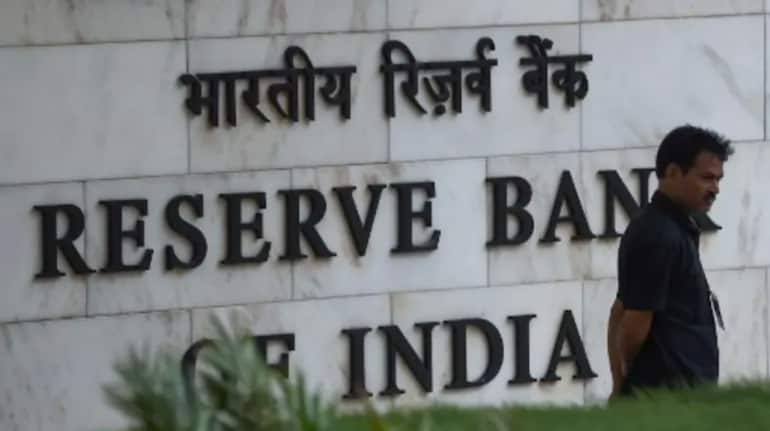
The Reserve Bank of India's (RBI) decision to increase the policy repo rate by 40 basis points on May 4 certainly caught the markets by surprise. Everyone knew rate hikes were coming, but perhaps starting next month. As such, the Monetary Policy Committee's (MPC) decision to act now — before the next scheduled meeting — definitely throws up a few questions. The first of them being: have matters changed so much since April 8 that the MPC could not wait until June 8 to increase the repo rate?
One must begin with inflation. Data released four days after the MPC's April 8 decision showed Consumer Price Index (CPI) inflation had rocketed to a 17-month high of 6.95 percent in March. Six days later, commerce ministry data showed wholesale inflation unexpectedly rose to a four-month high of 14.55 percent the same month. But that was 20 days ago, not this week.
More than just inflation
The MPC's resolution as well as Governor Shaktikanta Das' statement both noted the downward revisions made by the International Monetary Fund (IMF) to its growth forecasts. Further, while the committee also pointed at the IMF's higher inflation forecasts, Das spoke of inflation expectations getting unanchored if inflation remains elevated at "these levels for too long".
This doesn’t stand up to scrutiny. For one, the IMF's forecasts are almost always behind the curve. Sample its latest GDP growth forecast for India for FY23 from last month. At 8.2 percent, it is a full percentage point higher than what the RBI expects. When the fund releases its next update to its World Economic Outlook report in July, it will in all likelihood cut it to close to 7 percent.
Secondly, while Das' reasoning that inflation expectations could get unanchored if CPI inflation stays elevated for too long is correct, it is rather strange that it is being said so only now. CPI inflation has been above the medium-term target of 4 percent for exactly two-and-a-half years. In these 30 months, CPI inflation has been above 5 percent 27 times and above the 6 percent upper bound of the RBI's flexible inflation target 16 times. So, to state now — after not saying anything in the last two years — that inflation expectations could get unanchored is a tad disconcerting.
As for the out-of-schedule meeting and the subsequent rate hike, perhaps the MPC did want to act immediately after the inflation data was released on April 12, four days after it announced its last decision on April 8. But two policy decisions within days of each other would have suggested the MPC was responding to one data point — something it can't afford to do.
Then there is the small matter of a change in the MPC's membership. On May 2, the RBI's board approved the nomination of Executive Director Rajiv Ranjan as an ex-officio member of the MPC. Ranjan succeeded Mridul Saggar following the latter's retirement last month. While the MPC does not need all six members to be present to vote on the repo rate — the quorum is four — it may have waited for Ranjan's nomination to go through before meeting.
New inflation forecast
In April, the RBI made a huge upward revision to its inflation forecast for FY23, raising it to 5.7 percent from 4.5 percent. But what is the forecast now?
All that the committee's statement said on May 4 was that all factors — geopolitical concerns, global commodity price dynamics, and supply chain disruptions due to the resurgence of COVID-19 in major economies — "impart significant upside risks to the inflation trajectory set out in the April statement of the MPC".
Surely the MPC raised the repo rate by 40 basis points because inflation is now seen being higher than 5.7 percent in FY23? The rate hike cannot be just because of an increase in upside risks to the RBI's inflation forecasts, can it? From the look of it, one will have to wait for the next resolution of the MPC, scheduled to be released on June 8, to see if there is a change in the RBI's inflation forecast.
Stance pe dance
The MPC has decided to retain its stance from April — "accommodative while focusing on withdrawal of accommodation to ensure that inflation remains within the target going forward, while supporting growth".
However, Das said more than that on May 4.
In paragraph 4 of his statement (external link), the RBI governor mentioned the stance and the language as specified in the MPC's resolution and reproduced above. In paragraph 11, he said the stance announced in April was 'withdrawal of accommodation'. In paragraph 12, the governor explicitly states that the monetary policy stance was shifted in April. However, in paragraph 14, Das felt the need to "further stress that monetary policy remains accommodative".
This might be a case of nitpicking, but it very well illustrates the RBI's fears. It cannot continue with an accommodative stance given where inflation is. At the same time, it is not keen on shifting the stance to neutral lest it spooks the markets. The result is the central bank must hover somewhere in between.
But when does the RBI stop being accommodative? Das offered some clues, saying the 40-basis-point repo rate hike should be seen as a reversal of the rate cut of similar quantum announced in May 2020 "in keeping with the announced stance of withdrawal of accommodation set out in April 2022".
Economists are perplexed.
"So does this now mean that RBI/MPC can go ahead and hike another 75 basis points anytime at all and still characterise themselves as still being in the process of withdrawal of accommodation?" wondered Suyash Choudhary, fixed income head at IDFC Asset Management Company.
The MPC had cut the repo rate by 75 basis points to 4.40 percent in March 2020.
While the MPC can increase the repo rate when the stance is accommodative, surely a second rate hike should be accompanied by a change in stance? Or will the MPC stay "accommodative while focusing on withdrawal of accommodation to ensure that inflation remains within the target going forward, while supporting growth" until the repo rate is back at the pre-pandemic level of 5.15 percent?
Transparency and predictability are two crucial pillars of the flexible inflation targeting regime. And if a monetary policy decision raises so many questions, it perhaps lacks some transparency and predictability.
Discover the latest Business News, Sensex, and Nifty updates. Obtain Personal Finance insights, tax queries, and expert opinions on Moneycontrol or download the Moneycontrol App to stay updated!

Find the best of Al News in one place, specially curated for you every weekend.
Stay on top of the latest tech trends and biggest startup news.