

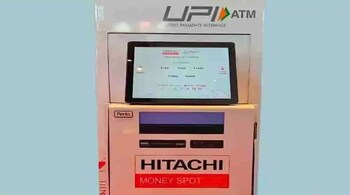
On social media, fintech executives have asserted that banks have saved on costs with the declining use of ATMs ever since Unified Payments Interface (UPI) took off during the pandemic. The argument is that the money saved can be considered viability gap funding for running and growing UPI, on which there is no payment commission or merchant discount rate (MDR).
The Indian government offered Rs 2,600 crore for banks and payment companies in the last financial year to support UPI without MDR. Banks estimate they spend Rs 12,000 crore annually to enable free transactions on UPI. For debit and credit cards, there is a 0.75 percent and about 2 percent MDR for transactions. Even UPI had MDR before December 2019.
McKinsey came out with a report last month that said payments revenue for Indian banks rose to $64 billion despite giving UPI free for customers. However, this does not talk about expenses and how the revenue come in. Bank verticals have different profit and loss statements and they often cannot be mixed because of regulatory norms.
Moneycontrol tried to look beyond the ATM vs UPI argument to see whether this works the way a lot of people think it does.
Are ATMs expensive to run?
Building an ATM costs more than Rs 10 lakh and the monthly running cost can be Rs 40,000 to Rs 3 lakh. The technology stack, loading cash, securing and transporting of cash, air-conditioning and security add up to the cost, which is variously estimated to be Rs 20 per transaction to break even.
Are ATM transactions free?
Banks offer three to five free ATM transactions per month when customers use their ATMs. Beyond that, Rs 20 per transaction is charged.
Do banks make money from services such as ATM cash withdrawals?
The RBI monitors charges and fees where banks make a profit and if any segment makes more money than warranted, it asks the banks to revise them. The idea is for charges to cover costs and not to make a profit.
Is UPI cheaper to run?
UPI transactions are much cheaper. But then, the number of ATM transactions are fewer than UPI transactions. On average, a customer carries out 4.8 ATM transactions in a financial year compared with 43 UPI transactions.
If UPI is cheaper than ATMs, why crib about MDR?
“Do we see anyone arguing that banks saved a lot of money when customers stopped going to the branches to withdraw money and used ATMs instead?” asked a former banker.
Are UPI and ATM transactions comparable?
The simple answer is no. The nuanced answer is also no. An account holder who does not use UPI would withdraw Rs 10,000 to Rs 30,000 from an ATM, depending on their income and monthly expenses. For the bank, this is a single transaction that requires one settlement.
However, a customer using UPI would make many small transactions for purchases of milk, vegetables, fruits, eggs, tea, cigarettes and bread, each for less than Rs 200. If the average transaction value is Rs 200, a person spending Rs 20,000 will make about 100 transactions.
More than half of all UPI merchant transactions are for less than Rs 200. The average ATM cash withdrawal amount is Rs 4,500.
How about expenses?
All these numerous small-ticket UPI transactions hit the bank’s core banking solution software, which was not designed to facilitate billions of transactions every month. Not just the sender, even the receiver’s bank has to make a settlement. For every transaction, banks send out two messages.
Is UPI more complex?
The user experience and interface may be easier for a UPI transaction. It needs robust IT infrastructure and security, apart from complex layers of application programming interfaces(APIs) that can connect and switch with customer apps and banks, apart from the National Payments Corporation of India servers. Running and maintaining this is expensive.
There are two more banks involved in the same transaction. If you use PhonePe, the app is likely using the services of Yes Bank or ICICI Bank. And if the receiver is using Google Pay and the app is using the services of Axis Bank or SBI, every single transaction goes through four banks and the servers of multiple mobile payment applications using multiple software systems, each of which has to ping a message. And in the middle is NPCI, which also gets a few basis points (bps) in all these transactions.
Do UPI apps and payment gateway make money in the absence of MDR?
Payment Gateway companies charge a 2 percent fee for platform usage from merchants, irrespective of the digital payment method. However, large merchants with huge volumes often gets a discount.
There is a fee structure for interbank transactions. However, this does not cover the cost for banks. The UPI apps such as PhonePe and Google Pay also get some revenue from banks for UPI Autopay and other transactions, which is mostly below Rs 50 crore per annum.
How much do banks gain from MDR?
While the general perception is that MDR generates a large revenue pool for banks, most lenders don’t make any profit while acquiring merchants. The benefit of acquiring a merchant is not necessarily in facilitating payments, but in gaining their current account and overdraft facility, their fixed deposits, and the salary accounts of the merchant’s employees, among other things.
Is the MDR rate fixed for all transactions?
Contrary to popular perception, MDR is often not a fixed rate. The maximum rate for MDR is set by the regulator, which is about 0.75 percent for debit cards and 2 percent for credit cards. In reality, merchants and banks negotiate hard and on an average, settle for a rate of about 1 percent.
Who benefits from MDR?
Ironically, the card issuing bank often gets the lion’s share of the MDR, often 60 percent of the collected fees. When it comes to credit cards, the risk for the issuing bank is much higher – from the cost of funds provided interest-free for 45 days, running the credit card stack which is expensive to operate and maintain due to security and the velocity of transactions, and the risk of customers defaulting on payments.
Is there a case for MDR on UPI?
The government has time and again maintained that UPI is a digital public good and there is a need to keep it free to accelerate digital payments in the country. Banks and the NPCI have said that unless there is an incentive and commercial motive, merchant acquisition growth will slow down.
“The target for the platform is to add another 100 million merchants and service providers, apart from 3 billion transactions a day. The reconciliation, merchant onboarding, constant addition of new features and use cases, and timely upgrades will have to be facilitated by a small MDR like 30 bps. You need to invest heavily or the growth will start to taper soon,” said a industry expert, who did not wish to be identified.
Do merchants and banks prefer card networks over UPI?
Banks prefer card networks because of their revenue potential. UPI’s growth has been due to adoption by customers as well as small merchants or shopkeepers. However, large merchants don’t have a specific preference, as long as it drives volumes. Card discounts, EMI schemes and credit facility of card networks mean that such customers tend to have higher spending potential. Since there is no MDR on UPI, they love UPI too.
Don’t banks get a free float of customer money when cash is kept in an account rather than withdrawn?
Banks have to pay interest on the balance kept in a customer’s account. Also, after setting aside a portion of this cash as a reserve as required by law, the amount that can be lent is often limited. The P&L of the lending division cannot be mixed with the payments division, which manages UPI.
How about customer transaction data that banks get from UPI, which can be monetised?
Banks already know the details of their customers such as monthly income and expenditure. For large-ticket personal loans, this data is good enough. If a customer uses credit or debit cards, additional details are available, apart from offering credit line and EMI facilities on debit card and personal loans on credit card.
Are ATMs better than UPI?
Unlike an ATM, UPI has the potential to provide several financial services and products. According to bankers, a 30 bps or Rs 3 MDR per Rs 1,000 transaction for large merchants will help the payment ecosystem players to invest more in UPI to acquire more customers and merchants, apart from providing competitive rates. The large merchants could be identified based on their monthly transaction volumes, just as it is done for GST calculations.
What can be done?
Leaving MDR to market participants could usher in a low and competitive rate since the platform now has the potential to make money through various products and services such as credit.
“While most capitalists want a free market with minimal interference and regulations, the irony of fintech executives wanting the government and banks to subsidise UPI MDR is ironic,” said the industry executive quoted above.
Should there be MDR on UPI?
The government’s policy and idea is to promote domestic digital payment networks over international technologies and card networks. The point is that ATM vs UPI argument or the debate over whether payment revenue can offset UPI expenses is an oversimplification of the MDR issue.
Discover the latest Business News, Sensex, and Nifty updates. Obtain Personal Finance insights, tax queries, and expert opinions on Moneycontrol or download the Moneycontrol App to stay updated!





