






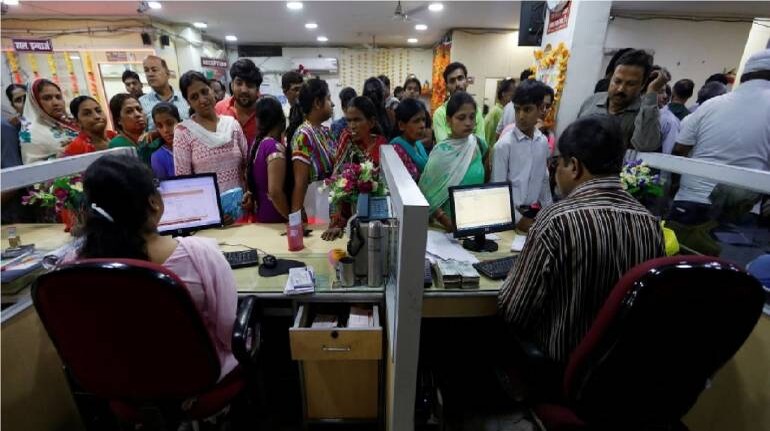
Since the Direct Benefit Transfer (DBT) apparatus relies heavily on existing banking infrastructure to transfer funds to social protection recipients, the shortcomings of India’s banking system trickle down to DBT beneficiaries at the last mile of social protection delivery. Whether citizens can convert their digitally received benefits into cash is a crucial determinant of the quality of our social protection nets. The delivery infrastructure that supports social protection is in serious need of upheaval and is fraught with issues such as paucity of access points, operational issues causing transaction failure, and unethical activities like fraud.
Even if a citizen did not fall through fractures in the initial stages of the welfare delivery pipeline (such as targeting, enrolment, and the processing of benefits), they may still face issues while withdrawing cash from their bank account. The case of Arun Lodhiya, from Shivpuri district of Madhya Pradesh, demonstrates how citizens could be deprived of their social protection entitlements due to breakdowns in the delivery infrastructure.
Arun frequently draws a wage from the Mahatma Gandhi National Rural Employment Guarantee Scheme (MGNREGS) and receives the wages thus transferred into his bank account. He usually approaches the local Customer Service Point (CSP) to withdraw his wages in cash through the biometrically-enabled Aadhaar-Enabled Payment System (AEPS). In early 2020, he made multiple such attempts but was told by the CSP operator that his bank account reflected an insufficient balance. Arun presumed that perhaps the MGNREGS wage had not yet been successfully credited to him and approached the Panchayat office seeking clarification. He was informed that payments had been successfully transferred, and therefore the issue must lie elsewhere. Upon examining his bank statements, it was found that the CSP operator had defrauded Arun during his attempts to withdraw cash. An amount worth Rs. 1,05,000 had been moved out of Arun’s account, and the dates and times of these transactions corresponded to his failed visits to withdraw MGNREGS wages. The CSP operator had been authenticating Arun’s identity with his thumbprint and using the opportunity to conduct his own transactions while wrongly informing Arun that he had an insufficient balance. This case is a particularly egregious, yet typical, example of how citizens can lose access to their social protection benefits at the last mile of cash-out architecture.
Also read: Backend botch-ups hamper Direct Benefit Transfer payments
While unethical activities like fraud are a very concerning aspect of the cash withdrawal stage, more commonly occurring issues also demand attention. The scale of the problem is alarming. A nationally representative survey of approximately 88,000 households reveals that between January and July 2020, 39 percent of households faced some issues during their cash withdrawal attempts. This figure is greater for rural households than urban, implying that rural households (who arguably have a greater need for reliable social protection) have a more challenging time accessing their DBT entitlements. The predominantly reported issues include transaction failures causing withdrawal attempts to fail (46 percent) and the cash-out process being time-consuming (42 percent). While these two instances are cases of operational issues that occur at the withdrawal point, there also remain access issues that make it challenging for the customers even to reach a withdrawal point.
Findings from the three-state Dvara-Haqdarshak survey of 1,500 DBT beneficiaries corroborate this profile of problems as well. 49.5 percent of cash withdrawal issues pertain to the cash-out point being far away, and 36.9 percent of issues reported are due to network errors and related failures. Our interactions with stakeholders invested in the cash-out process confirm this; for instance, a Common Service Centre (CSC) operator in Chhattisgarh lamented the quality of biometric devices provided to them and the frequent occurrence of network errors.
Also read: Application delays are a major bottleneck in enrolment for social protection schemes
The problems documented above indicate that while the problems of leakages and delays owing to cash delivery through middlemen may have been partially solved by digitisation, the necessity of reliable human touchpoints and physical infrastructure has not been obviated. We make the following policy recommendations to strengthen the country’s cash-out architecture and make the withdrawal of cash benefits more inclusive for citizens.
Activating banking points in locations where cash withdrawal services are difficult to access is the first step towards inclusivity in the withdrawal of social protection. We suggest that data available on the Find My Bank portal be made public and multiple stakeholders be provided access to it. This will allow private and public service providers to update the number of active cash-out points in their networks and identify underbanked areas. This tool can be further enhanced by layering access point density data over other demographic information (such as poverty rates and the percentage of DBT recipients in an area) to allow policymakers and financial service providers to make better-informed decisions.
ii. Revision of current incentive structures of individual banking agentsIn addition to enhancing the size of the cash-out network, it will be necessary for the Reserve Bank of India (RBI) to review the compensation structures of banking agents to ensure that agents are correctly incentivised to perform the critical role of facilitating the withdrawal of DBT benefits. Without appropriate compensation, agents will likely experience high rates of attrition or remain in business but indulge in unscrupulous practices toward customers.
iii. Establishment of clear accountability rulesThere is a need to implement proper protocols to hold the liable party (such as banking agents) accountable in the case of embezzlement of social protection benefits. Such rules should also ensure that the affected citizen is rightfully compensated.
(Aishwarya Narayan is a Research Associate at the Social Protection Initiative at Dvara Research).Discover the latest Business News, Sensex, and Nifty updates. Obtain Personal Finance insights, tax queries, and expert opinions on Moneycontrol or download the Moneycontrol App to stay updated!
Find the best of Al News in one place, specially curated for you every weekend.
Stay on top of the latest tech trends and biggest startup news.




