

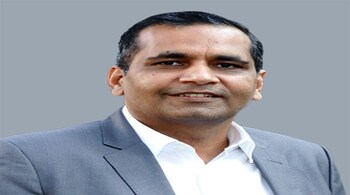
Affordable housing financer India Shelter Finance Corporation’s Rs 1200 crore offering is majorly offer for sale by its selling shareholders. The company has three major investors - WestBridge, Nexus, and Madison. Even as the other two shareholders would be paring their stake, WestBridge Capital, an investment firm focusing on mid-sized companies in India, is expected to stay on post its regulatory lock-in period.
WestBridge commands the largest stake at 56% and is also the promoter of the company. Notably, it isn't divesting any shares in the upcoming IPO and is bound by a regulatory lock-in for the next 12 to 18 months. With its status as perpetual funds, its commitment spans a considerable period, indicating a long-term belief in the company, possibly extending for the next decade, said India Shelter Finance Corporation Managing Director and Chief Executive Officer Rupinder Singh in an exclusive interview with Moneycontrol.
Nexus, an early investor dating back to 2012, holds a 28% stake. It plans to dilute around 15-20% of its current holdings, after which it won't be subject to any lock-in period. Despite the dilution, its vested interest in the company remains strong, the chief executive officer added.
Madison, holding a 10% stake presently, intends to divest around 40-50% of its holdings in the company. Its planned divestment marks a significant shift in its involvement with India Shelter Finance Corporation.
Edited excerpts:
Your AUM CAGR stood at 41% from FY21 to 23. What are the key drivers for this AUM growth? Talk about the diversification also within your AUM, because it seems like a regional focus growth that we're looking at.
Rupinder Singh: So just to give a little background of the company first, we started operation in 2010 from Rajasthan. And Rajasthan, we started from two locations and then spread our wings across the country. So today, we are in 15 states with 203 branches. Since Rajasthan was the first zone to start the business, automatically the AUM percentage there is on the higher side compared to the rest of the places. But having said so, there is a scope and traction that is coming from the rest of the places also. So when we see the AUM growth, if you see this is a consistency from the last many years. That's a trend. And this is all because the distribution is well set across these branches. The controls are very well mechanized from day one. The usage of technology in terms of making the entire process paperless from login to disbursements, and the distribution with the right set of people who are sourcing directly. These are the few key items that are supporting the consistent growth of that site. Additionally, the market in the affordable segment is responding very well. There's a lot of demand that is coming in the market, thanks to good schemes by the government like Pradhan Mantri Awas Yojana and support by the banks and institutions like NHP. These are the support items which is making this ecosystem worthy in terms of growth.
Do you expect to outperform that number or continue to grow at the same pace?
Rupinder Singh: So, in our business, there are two important things. One is distribution and productivity. So on the distribution side, we are available in 94% of the market. And additionally, we can add up many branches in coming times also. Every year we are adding 35-40 branches in these locations where we are available. Secondly, the productivity from each branch is also going up. So as a, you know, momentum from both sides, we are going to contribute to the growth around that side. The exact number will be more like a forward-looking statement. But yes, the trajectory shows that it is on the right way/right path.
As a business strategy, you intend to grow and diversify your distribution network to achieve deeper penetration. This would be in which all geographies? Right now three States contribute to around 62.7% of your AUM for six months ended September 30th.
Rupinder Singh: We started in Rajasthan. So earlier, we had an entire concentration in that place. But as we start spreading to other places like MP, Maharashtra, then eventually to Karnataka, Tamil Nadu. Now effectively with 15 States, you know, the business starts mushrooming in those localities also. So Rajasthan with 90% has diluted to the 30% level, which can further be diluted, though the trajectory of growth has remained consistent there. So, the rest of the places where there's a demand for mortgages are coming in a big shape. So, we expect the same numbers coming from the South, as well as sub-territories from the West. There's a lot of demand for housing per se. It is expected by one of the bureaus reports that there is a shortage of around 9-10 crores of houses in the country. So, if that is a demand that is coming, and this demand is majorly coming in the tier 2, tier 3 market, which is targeting the LIG/MIG segment. So, this is the exact segment that we are also catering to. So, with this demand coming up, there is a lot of vacuum in terms of generation of credit on that side and here our roles come basically. We feel this kind of demand, there are many companies like us, which would be required to meet them. So, I think there's a big opportunity for us. And on the basis of that, the penetration is expected to go in the State and the growth also.
Talk about your loan portfolio. Almost 56.5% of your portfolio is essentially targetting first-time home loan takers. How secured is this line of business lending versus the other business? How insulated is your asset quality? Talk about that.
Rupinder Singh: So, as a mortgage company, there is security in terms of the property that the customer offers. So, we have two sets of loans which we provide under this. One is a home loan and the other is a loan against property. Home Loan contribution is approximately 58% and we want to take it beyond 60%, which is also a regulatory requirement one way. The other loan that we look for is a loan against property. There also we want to continue to a tune of 39-40%. The underlying security is a very good instrument to safeguard the loan for the long term. Normally, LTVs in this particular category ranges from 50-52% in a blended form, whereas in the home loan category, we fund around 58-60%, whereas for loan against property, we fund around 45-46%. So, these are the LTVs, that we play around with. So, there's a lot of skin in the game from the customer's side, as well as a lot of equity they have to put in while getting a new home. And on the other side, they get a long-term loan from institutions like us. So it's a win-win situation, both from the customer as well as from the institution side.
Do you intend to change that loan mix anytime soon?
Rupinder Singh: So we are improving day by day. We want to take up to 60% of home loans. So the gap is not much. There's hardly a gap of 2-3%. It will be able to do in a very short period.
Within this financial year is what you are looking at, that 60% mix?
Rupinder Singh: Absolutely. That's the thought, and that's a requirement of regulation simultaneously.
Let's talk about your asset quality. We've seen some amount of improvement, at least on the books. Your asset quality has significantly improved. Stage three assets percentage has come down from 1.92% in 2021 to around 1% for the six months ended 2024 financial year. What explains this and what can be the growth now in asset quality numbers? Do you expect to stay steady around that level and still build on to the profitability? Provide us with some color on that.
Rupinder Singh: So, in our case, the asset quality is normally more tighter than the rest of the other set of classes of business in this category particularly. One major reason is the underlying security in terms of mortgage with customer offers. So in 13 years of history, we operate around 1.2-1.3% of NPA levels, what we have seen for many years, except the COVID time, which are the two years which was tough for every industry and obviously for us also. So there, the asset quality deteriorated and has gone to the level of 2.5 approximately. But as the clouds of COVID dispersed, there's a back in improvement in collection efficiencies and customer also started repaying those who got affected badly in their business cycle because of COVID. So there's a lot of traction that has come up. And now what we see, it is around 1-1.1%, which hovers around. And we feel the kind of market tendencies or euphoria is there. We feel that this is the traction that is going to happen for quite some time. But in the long term, if you see, this asset varies anywhere between 1.2-1.3% at the max.
Let's focus on your NIM performance. It's been at 10%. Your RHP says that the business is affected by volatility and interest rates, both for lending and treasury operations. Give us more guidance on the profitability path. What kind of NIMs can be expected going forward?
Rupinder Singh: For this business, the main resource for us is capital and cost of funds. Thankfully, we have support from NHP, where around 18-19% of our funding comes from NHP, which is at a low cost compared to what we get from large banks and FIIs. And this is again a long term. Having said so, if we see the overall cost of funds, that remains somewhere between 8.6-8.7% for us, whereas the spreads are in tune with 6%. So the spread on this one side is 6%. But overall NIM, if you see the fees and incomes added to above that, that range is between 9-10%. This has in continuous for the last many years. And this is the way the business has been operated. So since we source directly, we engage customers, and thereon by virtue of giving a better service, we get better rates also. On the other side, we also have tight control over our treasury also, and support from institutions like NHP. That also helps us out. So we are able to maintain the spreads of 6-6.5%. And eventually the NIMs of around 10%.
Let's also talk about your capital adequacy ratio. It's come down from 71.5% in 2021 to 52.70% in FY23?. Post the issue, what the number will look like?
Rupinder Singh: So typically in the housing side, where the risk weightage is quite high, the focus is more on the leverage, particularly. So we see the September leverage around 3.5. So our always focus is how to make sure that the ecosystem where we operate and what kind of leverage we should operate, keeping in mind everything very well intact optically also. So it is expected that a leverage of around 4 is comfortable by the ecosystem, which includes banks, rating agencies, and all. So we are quite near to that leverage. This is one of the factors that we have come for the primary issue out here. So with this issue, our net worth will cross beyond 2000 crores and leverage will come down. Then we can request and go forward with our persuasion for getting a rating upgrade with the rating agency, and automatically help in the reduction of the cost of funds. So more than CAR, our thought is always on the leverage side, particularly, when we are operating companies in particular in the housing finance sector.
So, immediately, this leverage will come down from 3.5 to less than 3, but I think it's a matter of another 12-18 months before we'll be back to 3.5, and eventually, we would love to go at a higher level, which should automatically bring a better ROEs around this.
Let's talk about your business moat because your AUM thus far has been better than most of your peers, like Aadhar Housing Finance, Awas Finance, and Aptus was in the range of 20-30%. (A), What explains this kind of growth? How sustainable is this growth and what are the levers of this growth?
Rupinder Singh: I mentioned there's a lot of demand in the market typically on the housing side. And if housing is growing, then automatically housing finance industry, particularly the industry where we operate, has a chance to grow in those directions. So from the beginning, we have a strategy to have a structure which is covering pan India operations-basically. So we are one of the very few companies which have operated from day one across the country. Now with 15 States, I think we cover almost 94% of the market. So, this gives the levers around that piece to go deeper into the market to have more penetration in those markets build more branches, and get more volumes. So, this is an added advantage which we have. Secondly, from the beginning, we have the right blend of technology with people. So, ease of doing business is our mantra when operating in the field. So giving a better turnaround time in the market to the customer. So, our turnaround time for login to sanction is merely three days. So, we are giving justice to the customer in three days for his loan requirement whatever it is, and eventually another three days to disburse that case. So, this brings a lot of traction there. And third important – is engagement with customers directly. So depending upon field force, instead of involving the third-party intermediaries, this brings a lot of push from our side. And hence, better execution and getting the desired number which we look for.
Do you expect the outperformance as compared to your peers?
Rupinder Singh: So depending upon the technology and blending with people, our distribution, is fairly well spread across 15 States and direct sourcing. These are the three factors, which is having a good impact and that's our USP also.
Catalyst Trusteeship and Nexus Ventures, of course, are the biggest selling shareholders in the OFS for the IPO. But in terms of WestBridge Capital, the promoter is also in that particular instance. Any kind of lock-in period for this one?
Rupinder Singh: So, three major investors we have – WestBridge, Nexus, Madison. WestBridge holds 56%, Nexus holds 28%, and Madison has having 10% stake in our company. WestBridge also has a promoter tag, and they're not selling anything in this IPO. And they do have a regulatory lock-in for the next 12 to 18 months. Since they are perpetual funds, their commitment is for a pretty long time. And since fund life is infinite, so they have that belief in this company they want to continue for the next decade or so. This is the thought for the WestBridge side. Nexus is, again, one of the oldest funds that has invested in India Shelter way back in 2012. They have funded a [inaudible] some part. So they'll be diluting around 15-20% of what they are holding today. And after that, there will not be a lock-in for them. That is one thing. But they have a good interest in the company. Madison is a third holding 10% currently, and they are going to shell off around 40-50% of what they are holding this company basically.
Discover the latest Business News, Sensex, and Nifty updates. Obtain Personal Finance insights, tax queries, and expert opinions on Moneycontrol or download the Moneycontrol App to stay updated!





