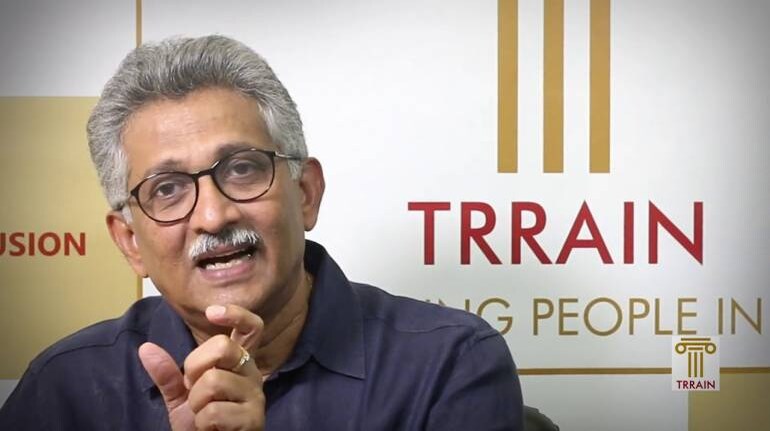
B.S. Nagesh, the man behind the first Shoppers Stop store, who led the department store chain through its formative years, says offline retailers are confronting a resource crunch because investors are so gung-ho about the online opportunity. Nagesh, who set up the Retailers Association of India and serves as non-executive chairman of Shoppers Stop, spoke about the polarisation of the retail industry, challenges before offline retailers and the direct-to-consumer (D2C) opportunity in a conversation with Moneycontrol on the sidelines of the India D2C Summit. Edited excerpts:
It has been more than 10 years since you quit an executive role at Shoppers Stop. As a veteran of the industry, how would you describe the last decade for retail?
The last 10 years in retail have been fairly topsy-turvy. Three major trends have emerged in these years in the industry. The first major trend being (that) a huge amount of capital has been infused into it by large India players and external funds. If you look at Reliance or Tatas, these large industrial houses are betting on retail and it has become their core part now. And this is true around the world. If you look at the top five companies, whether by turnover, profitability, or wealth creation, there's always a retailer among them. That is a big change that has happened. The second change is the advent of technology and digital and it is available at a very economical cost to retailers, whether they are small or big... The third change, and which is the biggest change, is the launch of Jio. And the fact that UPI (Unified Payments Interface) is available and everybody has become digital. The cumulative effect of all three is that the Indian consumer is now digital on many transactions, whether it is payments or consumption-on-the-go. Will consumers adopt the digital medium for shopping? That remains to be seen as e-commerce is only 10-15 percent of overall retail.
E-commerce, however, is growing rapidly. Had you foreseen this surge in digital commerce?
The first e-commerce site was created by us in 1998. Okay. So, as a business, we always knew that this will become big. But as we went through the proposition, we did not take that call. But as an industry, e-commerce, omni-channel is going to be very important for everybody. But the biggest challenge I am seeing is that this is going to happen in the future; currently, the channel contributes between 5 percent and 15 percent of the business of most retail companies. Businesses need to understand that the omni-channel opportunity simply starts with doing well in your current brick-and-mortar stores and extending digital commerce to the consumer; therefore we should not lose sight of the core business when looking at digital. At the end of the day, if the core business is profitable, digital is adding customer value. So for brick-and-mortar retailers or online players, there is no option (but to adopt an) omni-channel (strategy)...
Several offline retailers have been late in tapping e-commerce as a channel and some are still struggling to get their act right. What would be your advice to these retailers?
It depends on the size of the company. The large companies are operating on legacy systems and therefore it is tough for them to be nimble. These companies have to go through the journey, which would require a period of six months to two years. One has to remember that, whether it is online or offline, the customer never gives it all. Walmart and Amazon are the two largest players in their worlds, but neither of them owns a 20 percent share of their largest market, which is the US. So one need not worry that there will not be a business tomorrow. That is not the case. The small players have to collaborate. They do not need to go through the curve on their own. There are so many start-ups out there that can help them. So collaboration is the only way, and they can work (together). The medium-size players have to take a call about which side they want to be on. If they have the cash and they have the investment, then they can go and set up (the other channel). But there, too, collaboration is much easier. There are tech collaborators and logistics collaborators, and everything is plug-and-play. So I would suggest that the medium and small players go into plug-and-play for most of the technology, and that would take three to six months. It may take time if they try to build the technology on their own.
What are some big challenges in front of offline retailers that you see today?
The Indian retail market and retailers are highly polarized at the moment. So we have the big daddies, and the medium ones are getting squashed. The smaller ones do not get the opportunity, both from a skills and resources perspective. The lack of resources is not just about money but also about people as it has become expensive to hire. The single biggest challenge for small players is resources, for middle-sized players focus, and for the large players to grab market share and...the capital to do that.
And this stands for both offline as well as online, right?
Yeah, both offline and online. But the challenge is that because investors are thinking that digital is the way forward, investments are not coming as much offline as they are going into online. There is a resource crunch and it is the offline retailers who are grappling with this, from an investor’s point of view. Also, the mindset has not changed. A lot of offline retailers do not have the mindset, and they have to look forward and digitisation is not equivalent to e-commerce. Digitisation is about mindset change and the entire organisation adopting digital. But somehow the message is that going online is being digital, which is not true.
D2C is the buzzword in the industry. What's your opinion on the way forward for D2C companies? And how are they going to change the retail landscape?
India’s retail market is huge today and we are talking about $1-1.3 trillion of consumption spends and even if you take an inflationary 5 percent, we are adding $50 billion every year. And all the D2C companies put together are not even $2 billion. The opportunity is very large. People should not worry whether there is enough opportunity but need to just focus on what they are doing. Currently, it has started with fashion and lifestyle products but the opportunity is large in other product categories too. However, the SKU (stock-keeping unit) value or the build value must be in the region of Rs 500-1,000 for it to become at least break-even or profitable in the future. Therefore, this has started with fashion and lifestyle and organic products where you can command a higher price value because the cost of reaching customers is very high.
Discover the latest Business News, Sensex, and Nifty updates. Obtain Personal Finance insights, tax queries, and expert opinions on Moneycontrol or download the Moneycontrol App to stay updated!

Find the best of Al News in one place, specially curated for you every weekend.
Stay on top of the latest tech trends and biggest startup news.