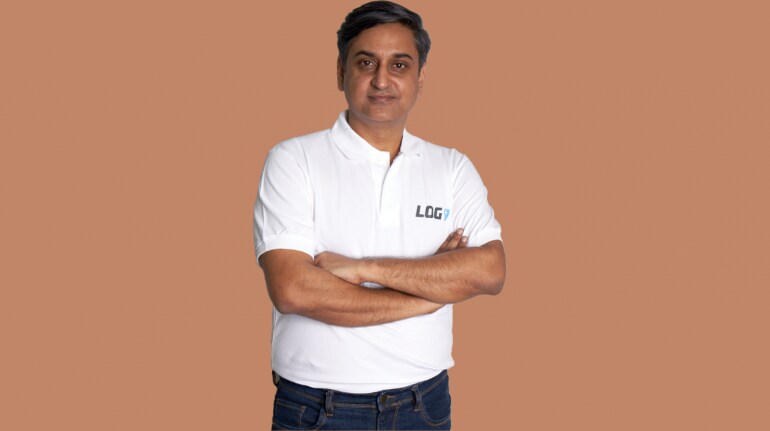
The Indian EV ecosystem underwent a breakthrough moment as Bengaluru-based battery tech start-up Log9 Materials commissioned the country’s first lithium-ion battery manufacturing unit, last week. For a country which imports 100 percent of its lithium-ion battery cells, the establishment of a 50mWh battery cell manufacturing unit is the first step in bridging the price gap between ICE and EVs. In an interview with Moneycontrol, Pankaj Sharma, MD and Co-Founder of Log9, talks about how the company intends to fine-tune the lithium-ion cell to suit India’s climatic and infrastructural conditions and why existing battery chemistries don’t address the need of the hour.
What do you think this breakthrough, of having the country’s first commercial lithium-ion manufacturing facility, means for the EV market?In my opinion, this is a moon-landing moment for the EV sector. It lays the path for everybody else to follow. It’s a big deep tech breakthrough for us. It answers the question “Can it be done in India?” Can only large players and OEMs do it? No. There is a strong need to set it up. For a lot of brands, it’s far easier to simply import the cells from China or other markets, given the capex that goes into setting something like this.
So how did Log9 manage to beat other players like Adani, Suzuki, etc? Is it because the scale of operations for these upcoming gigafactories is much higher?We started planning this out two-and-a-half-years ago. It’s not about just investing in infrastructure. That’s the easiest thing. You can go buy infrastructure and put in capex and get it done. But you need to figure out the fundamentals first before economies of scale come into play. What sort of cell am I going to produce? What sort of cell chemistry is ideal for our climate? And what sort of processes are going to be put in place? You have to optimise the processes before you set up the facility. What sort of form factor? You need to connect with your supply chain to ensure that all the raw materials are in place, and which ones are abundantly available. Once you begin things, you can’t shut it down for a long time because you’re going to lose a lot of money.
We started creating our own processes and are generating a lot of deep-tech intellectual properties. We’re working with some of the best minds in the business, across the world in battery tech. And tapping into their laboratories, their knowledge, and their PhD and postdoc students. We’ve been trying to tap into the global academic talent density.
What is the roll-out plan? When will you reach the target of 50mWh production capacity?The facility is ready, we are starting to make cells. As we speak today, cells are being manufactured in that facility. Normally we fire up 20 percent of that peak capacity and check the systems, and then gradually build capacity and reach peak capacity in less than a quarter. The next month is all about stabilising those capacities.
Speaking of raw materials, given that we’re not a resource-rich country when it comes to lithium and cobalt, how are we to ramp up lithium-ion battery production? Will you be sourcing lithium domestically?Lithium, cobalt, nickel and magnesium aren’t exactly abundant materials, yes. It’s also very expensive to purify them. But if you take a cell, you’ll see that the percentage of nickel and lithium is very little. In a lithium-ion cell, lithium is only 2 percent. About 98 percent is everything else. The rest of it is aluminium, copper, graphite, plastics, etc, which are abundantly available in India.
The problem is not poor access to raw materials. The problem is converting raw material into battery-grade material. Which means it has to go through a processing unit through which you take normal aluminium and make it battery-grade aluminium. And that doesn’t happen in India. What the country is lacking is not natural resources but fundamental material science engineering and large-scale companies. So, when we started working on our battery cells, we were clear that we wanted to use Earth's abundant materials. We wanted to move away from cobalt because that’s the trickiest metal. The supply chain is the most unstable there. So we started to play around with other additives to successfully remove cobalt. As for lithium, we’re still importing it. But we’re yet to see how the news of lithium in Jammu & Kashmir shapes up. But I’m of the opinion that a lot of urban mining will happen.
Do you think there’s a lack of talent and major supply chain deficiencies, ailing India's battery cell manufacturing space?Yes. Both have been impedimentS for us. In India, nobody has built lithium-ion cells, so the talent doesn’t exist. No one has gone through the journey. And there’s a global talent crunch. Even in Silicon Valley, there’s a huge crunch in the battery development space. We’re hiring team members and then training them at our labs, where they learn a lot. We’re filling knowledge gaps. We’re also working with all the IITs and other universities, including Tokyo University. We have several patents. It’s because we’ve been working collaboratively with some of the best minds in the world. We reach out to the supply chain guys. We need to make sure it’s of a certain grade before. Then we see how that material stacks up in a production-ready facility, then they get a contract. A lot of their testing and validation happens through us. And in return, we get to effectively secure our supply chain.
Yes. It’s an important question because we’re the largest patent holders in the battery sector in India and several other countries. At present, we have over 114 patents in the market. We’re here to play a long-term game in the innovation and R&D of lithium-ion cells. The idea is to continuously improve that cell, and have a Version 1 today and another in a few months. We have a full R&D roadmap on how to improve the cell. We will be recognised for bringing a new and better cell to the market every 12-18 months.
What sort of battery chemistry are you specialising in? LFP, NMC or something else?We’re actually working on a third type called LTO, that’s Lithium Titanate Oxide. The beauty of LTO is unlike the conventional lithium-ion chemistries that heat up when you charge and discharge them really fast. They’ve been designed to work at 25 degrees when you’re operating them. And that’s a classical NMC cell that can hold more energy but likes to be handled very gently. Don’t charge it fast, don’t discharge it fast and it’ll give a lot of range. LTO cells can be charged 10 times faster. And I can discharge them much faster.
Also, our understanding is that what India needs is not EVs with a lot of range. Nobody is asking for 200-400 km vehicles. What India needs is a 150-200 km range that can charge fast. Let’s take a three-wheeler that’s doing deliveries for Amazon. You want the three-wheeler to be operational for 18 hours. You can’t afford to wait for 5 hours for it to charge. Fast-charging these vehicles holds the key to mass adoption. And LTO is the right chemistry for that. It can also withstand far more extreme temperatures without needing thermal management. It can also live for much longer.
A lot of these advantages sound similar to solid-state batteries. Is that technology under consideration as well?Whenever that comes, we will look at it seriously. Right now, the solid state is still in the lab. It’ll take 4-5 years to mature. LTO is already commercially viable. The only major difference in solid-state batteries is that the electrolyte is in a solid state. So moving from our chemistry to that is an add-on invention and doesn’t require a lot of change. So version 10 of a Log9 battery could be solid state. But we have to go through versions one, two and three first.
How much more expensive is an LTO battery compared to an NMC or LFP?It’s nearly twice as expensive as a conventional LFP cell. But that’s not a problem because it runs five times longer. But we’re also developing LFP cells. We’re now also optimising LFP to be fast-charged which doesn’t exist in the market so far. But we’ll be able to talk more about this during Diwali.
Are you primarily looking at e-two-wheeler brands to partner with? Are four-wheelers also under consideration?At this point, a lot of focus is on two and three-wheelers. That’s where we see a lot of demand for Log9 cells. Primarily B2B. So, last-mile delivery. On an ICE engine, it is done at roughly Rs 10 per kilometre. With an EV it’s Re 1 per kilometre.
With locally manufactured cells, do you see the per-km running costs coming down even further?As the up-front cost of the product goes down, I think the total cost will also come down. But really, any ICE engine that gets released in the market, it gets more expensive to both purchase and run. There’s inflation at play. But with electric vehicles, the reverse is expected. That means you’re asking an industry to innovate against the pressure of inflation. In spite of raw material costs for steel and aluminium going up.
But wouldn’t market penetration be higher with lower costs?The thought is that economies of scale will bring the price down. But a 20-30 percent reduction in price is not something that can happen with economies of scale. There you’ll see a price correction of about 2-5 percent. What brings large price drops is the domestic production of cells. If you can somehow have a lever on controlling the prices of the raw material and get them cheaper, then the production cost of your battery pack is cheaper. Running costs are also dependent upon the input cost of the electricity charging these vehicles.
What about swappable batteries? Is that something you’re looking at?I’m not a big advocate of swappable batteries. Because if you can fast-charge a battery, why would you want to swap it? Would you buy three engines for one car? With swappable systems, the cost goes up, the maintenance goes up and the infrastructural cost goes up. Not to mention battery waste. Things are moving away from swapping stations. Even for two-wheelers, swapping is a very intermittent solution. If Ather and Ola Electric removed the battery from their system, the cost would be half. From a pricing perspective, it’s in their favour. Except for Gogoro, no other EV company has built a successful business model around swapping. A battery is 60 percent cost of the vehicle. Who will pay for the other two batteries? When fast-charge batteries of Log9 come into the market, swapping won’t really be needed.
It only makes sense for e-two-wheelers, where 80 percent of purchases happen in the B2C space and not B2B.
Discover the latest Business News, Sensex, and Nifty updates. Obtain Personal Finance insights, tax queries, and expert opinions on Moneycontrol or download the Moneycontrol App to stay updated!
Find the best of Al News in one place, specially curated for you every weekend.
Stay on top of the latest tech trends and biggest startup news.