






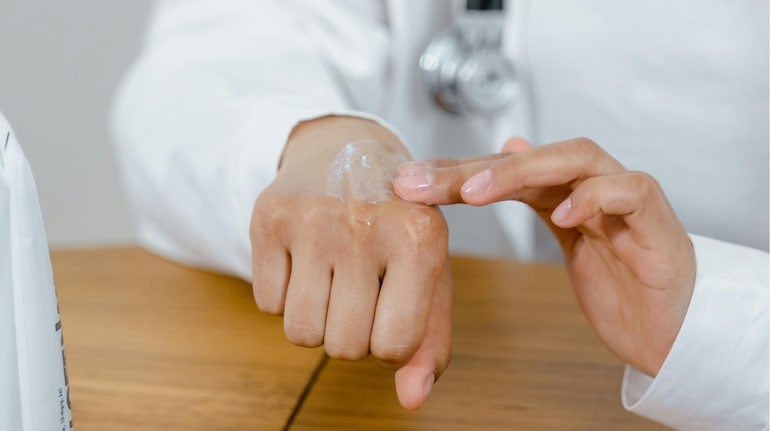
Atopic dermatitis is a condition that is chronic, and not contagious. It can strike anytime, irrespective of your age. It has been found that moisturising, following gentle routine, and getting medical treatment can help fight it.
The most notorious sign of eczema is itching, the one that compels you to scratch continuously. The scratching can break the skin, leaving patches that crack, become red, or even bleed. Apart from the rash, the discomfort can hamper your sleep and mood. And turn every day tasks into a balancing act.
Also read | Eczema treatment: Cure it with a good eczema cream, cold compress and coconut oilAdditionally, those with a family history of eczema, asthma or hay fever are more likely to develop it. It’s common in childhood but far from guaranteed to fade away; many continue to manage symptoms well into adulthood. At its core, eczema involves a weakened skin barrier that struggles to keep moisture in and irritants out.
That vulnerability makes skin more likely to react to allergens, pollutants or even changes in weather. Complications such as infections or increased sensitivity aren’t unusual, and some people also experience related conditions like asthma or food allergies.
Diagnosing eczema relies on trained clinical examination and a detailed patient history. A doctor usually begins by examining the skin and asking about any family tendency toward allergic conditions. When symptoms resemble those of other skin problems, blood tests or a biopsy may help clarify things. Because the condition flares and settles unpredictably, a firm diagnosis sometimes emerges only after several visits.
Also read | Acne, eczema, psoriasis and more: Causes, symptoms and treatment tips for 13 common skin problemsThere may not be a definitive cure yet, but eczema can be managed with regular care. Dermatologists often suggest sticking to warm, never hot, baths or showers, choosing mild, fragrance-free cleansers and drying the skin gently afterwards.
Moisturising helps to control. Experts stress on applying fragrance-free cream, ointment, or lotion twice a day. It helps protect the skin. When flareups strike, mild anti-itch cream such as hydrocortisone can lower irritation. More persistent cases call for prescription treatments, topical immuno-modulators, or light therapy.
Applying a fragrance-free cream, ointment or lotion twice a day helps reinforce the protective barrier the skin struggles to maintain on its own. When flare-ups strike, mild anti-itch creams such as hydrocortisone can ease irritation. More persistent cases may call for prescription treatments, topical immunomodulators or light therapy.
Avoid harsh soaps, rough clothing, strong, detergents, smoking, cigarettes, extreme temperatures, and stress. Doing these can help reduce flareups. And following the right routine can aid in managing the condition, making your skin calmer and comfortable.
Disclaimer: This article, including health and fitness advice, only provides generic information. Don’t treat it as a substitute for qualified medical opinion. Always consult a specialist for specific health diagnosis.Discover the latest Business News, Sensex, and Nifty updates. Obtain Personal Finance insights, tax queries, and expert opinions on Moneycontrol or download the Moneycontrol App to stay updated!
Find the best of Al News in one place, specially curated for you every weekend.
Stay on top of the latest tech trends and biggest startup news.




