

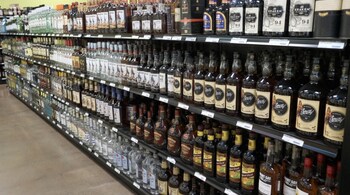
Gurugram’s upscale Bristol Chowk, located on Golf Course Road, has become the costliest liquor licence zone in Haryana’s history after a single bidder, G-Town Wines, secured the rights for a staggering Rs 98.6 crore, a 4.2% jump over the reserve price of Rs 94.6 crore. The bid, part of the state’s latest excise policy, marks a near 100% surge from last year’s Rs 49.3 crore auction for the same zone, TOI reported.
Officials attributed the sharp rise to the extended 22-month licence period (June 2025–March 2027), up from the previous 12-month term. “With the new policy, the duration for the licence fee has also increased,” a senior official was quoted by TOI. Reserve prices represent the minimum bid required to secure a liquor vend licence.
As per TOI, the weekend auctions saw brisk bidding, with 50 out of 79 zones in Gurugram East sold for a combined Rs 1,270 crore - 6% above the reserve price of Rs 1,198 crore. DLF-3 and Shankar Chowk followed Bristol Chowk as the highest-grossing zones, fetching Rs 63 crore and Rs 62 crore, respectively. Horizon Plaza in Gurugram East secured the second-highest bid in its zone at Rs 46.2 crore, just marginally above its reserve price.
Some areas saw aggressive bidding, with Nawada (30% above reserve), South City (25%) and American Express on Southern Peripheral Road (24.3%) leading the pack. “The department received a better response in the third round of the excise auction compared to the previous round,” said Amit Bhatia, deputy excise and taxation commissioner (DETC), quoted TOI. “It indicates widespread participation and a positive response to the state's excise policy.”
Haryana’s cabinet approved the 2025-27 excise policy on May 5, introducing earlier closing times for urban vendors, banning live performances in ahatas (pub areas) and prohibiting alcohol sales in villages with populations under 500. The state aims to collect Rs 14,064 crore this cycle after falling just short (Rs 11,491 crore) of its Rs 12,650 crore target in 2024-25. Gurugram alone contributes 35-40% of Haryana’s excise revenue.
The remaining 21 zones in Gurugram West will go under the hammer on June 3, followed by 29 in Gurugram East on June 5. With premium locations already smashing records, the auctions signal robust demand despite tighter regulations.
Discover the latest Business News, Sensex, and Nifty updates. Obtain Personal Finance insights, tax queries, and expert opinions on Moneycontrol or download the Moneycontrol App to stay updated!





